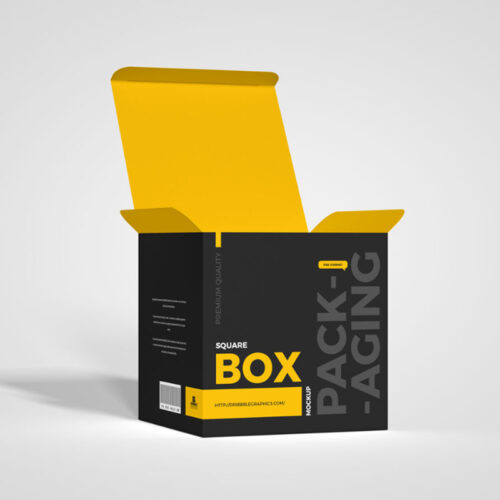
Die-cutting quality depends heavily on the equipment used. Flat-bed die-cutting offers high precision, making it ideal for small to medium batches, whereas rotary die-cutting is faster and better suited for high-volume production. Factors such as cutting pressure, blade maintenance, and the condition of the backing plate all influence the final quality. Any paper scraps or rough edges resulting from the process must be cleaned up during subsequent finishing stages.
There are various types of cutting dies. Wooden-board dies are the industry standard; they are created by using lasers to cut slots into a wooden board, into which the blades are then embedded. Etched dies offer superior precision and durability, making them suitable for intricate designs and long-term production runs. Rotary dies are designed for high-speed, mass-production environments. The choice of die depends on the specific order requirements.
Common issues generally fall into a few categories. Dimensional deviations usually stem from die precision or equipment alignment errors; creasing failures (such as cracking) are often linked to paper grain direction or crease depth; and rough edges signal blade wear. These problems can—and should—be identified during the prototyping stage, as modifying a die is far less costly than altering a full production run.
The cutting die is the tool that enables the “single-pass forming” art of packaging: get it right, and thousands of boxes are produced with perfect uniformity; get it wrong, and you have to start all over again.
A cutting die is a tool assembled by mounting blades and creasing rules onto a baseboard to cut and score paperboard on a die-cutting machine; the cutting blades define the outer contours, while the creasing rules create the fold lines. The box’s shape, openings, and unique edge profiles are all formed in a single operation using the die.
Every unique contour and fold line on a box isn’t created by hand-cutting with scissors, but by a “blade” concealed within the machine—that blade is the cutting die. This article explains the ins and outs of cutting dies, giving you a deeper understanding of packaging production.
Laser-cut dies are a common choice. They offer high precision, fast production speeds, and moderate costs, meeting the needs of the vast majority of packaging boxes. They are used for small-batch trial orders and standard box shapes, and are the primary method for rapidly producing samples during the prototyping phase.
Etched dies represent an upgraded option. Featuring blades formed as a single, integrated unit, they offer superior precision and stability and resist deformation during repeated use. They are ideal for products requiring fine lines, small lettering, or long-term repeat orders. While the initial cost is higher, the expense becomes more economical when amortized over large production volumes.