Custom Thank You Cards for B2B: Turning Trade Show Follow-Ups Into Repeat Orders
A retail thank you card closes a purchase. A B2B card has a longer job: it has to survive a sample box, a procurement folder and three weeks of silence, and still remind a named buyer which conversation you had. Most of that value comes from format, variable details and timing — not from the paper stock. Here is how to plan a B2B run.
Solicitar um orçamento
Introduza a quantidade que necessita e adicione-a à sua lista de orçamentos para solicitar preços.
Descrição
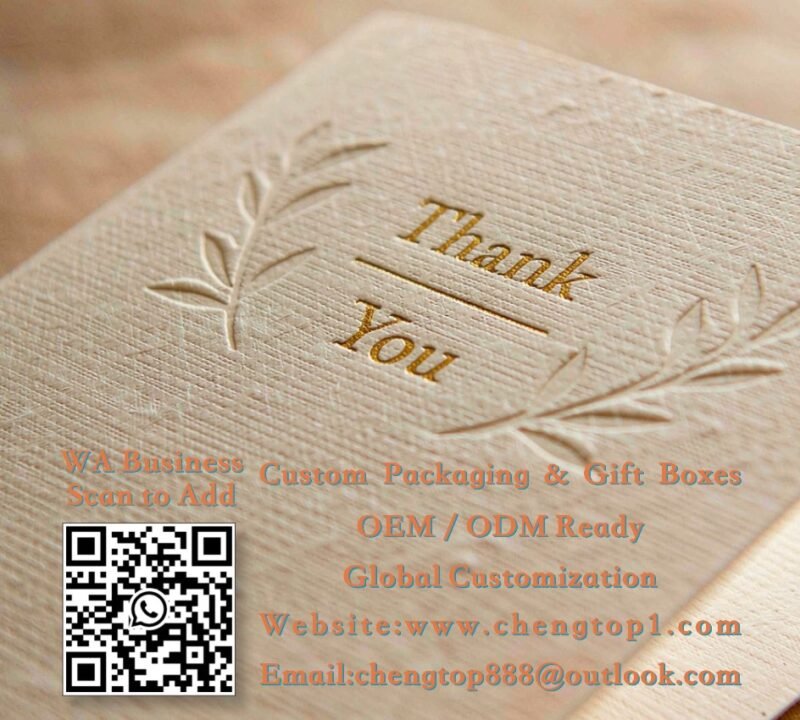
Most B2B cards are an afterthought: a retail design with the logo swapped, printed in the same run as the consumer cards. Then the sample box ships, the contact changes role, and nobody can tell which quote the card belonged to. B2B is not about sentiment. It is about being easy to find when a buyer reopens a file. Three decisions shape that — a format that fits a sample box and a folder, the variable information that ties the card to one meeting, and the timing relative to your follow-up email. Settle those before artwork and a modest print run does more work than a large generic one. Our custom thank you cards sizes are a useful starting point.
Format That Survives a Sample Box and a Procurement Folder
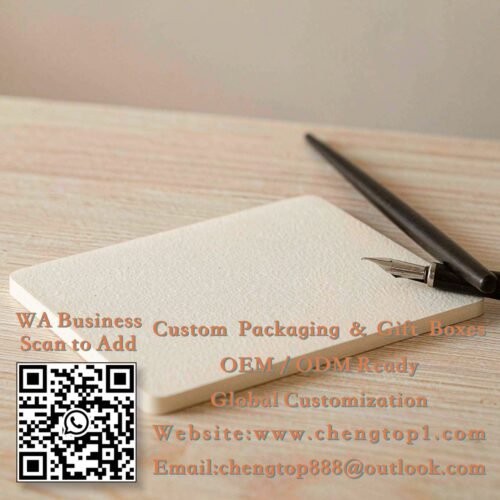
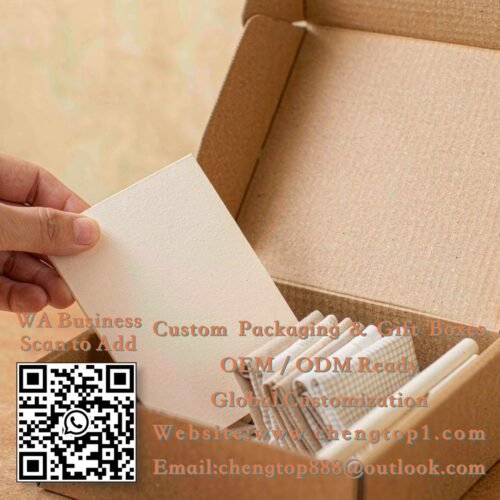
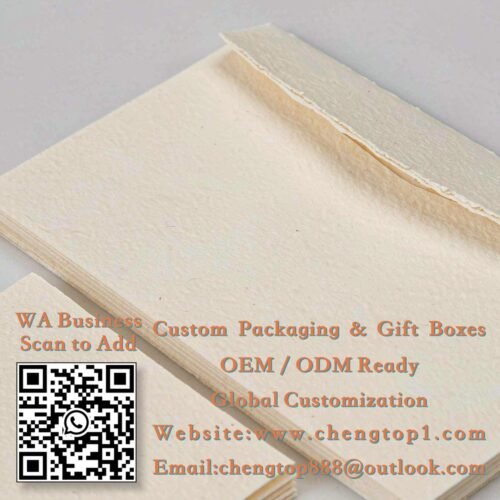
Size is the first constraint. A 90×54 mm card slips into a catalogue, a badge holder or a sample sleeve without folding; A6 (105×148 mm) leaves room for a short note and still fits a standard mailer; a 120×120 mm square looks good in a gift box and awkward in a file. For B2B, the smaller two usually win. Paper of 300–350 gsm uncoated holds up in transit and takes pen ink without feathering, while a 600 gsm double-mounted card feels substantial but adds postage and can jam a feeder if you plan to overprint names later. Heavy gloss lamination is the wrong surface here: a buyer who wants to add a line by hand cannot.
Print method follows quantity. Offset suits one design at 1,000 pieces and above — our usual minimum — with a lower unit cost; digital suits 100–500 pieces or a run where the contact name changes across batches. Sampling takes 3–7 days and production 10–15 working days after approval, so a card ordered after a show has ended will not catch that show’s follow-up wave. Plan the run before the stand is packed.
- 90×54 mm fits a catalogue; A6 (105×148 mm) leaves space for a short handwritten note
- Uncoated 300–350 gsm takes pen ink; heavy gloss lamination does not
- Leave a 20–30 mm blank panel even on a printed card, for one line written by hand
What Belongs on a Card a Buyer Actually Keeps
Keep the hierarchy short: one named contact, one reference to the show or meeting, and one clear next step. A card that says thanks for visiting our stand is anonymous within a week; a card that mentions the 250 gsm kraft sample discussed on Tuesday is tied to a real conversation. Put the contact’s name and direct email on the card, plus a QR code that lands on a quote or a product page rather than your homepage. Skip the consumer discount code — procurement teams do not redeem those, and it makes the card read like retail mail.
If you sell into two or three language markets, split the run into versions rather than printing one card with three languages at half the type size. Variable-data printing lets the contact name, show name and language change without a new plate, so a 1,000-piece order can cover several batches. A QR symbol needs roughly 15×15 mm plus a 2–4 mm quiet zone, and uncoated stock with dark ink scans more reliably than foil or a busy pattern behind it. One honest caveat: a QR code on a card is a convenience, not a follow-up plan. The email sent within 48 hours does the real work; the card is the physical reminder that keeps it attached to the right samples.
- One named contact, one meeting reference, one next step — nothing else
- QR codes need about 15×15 mm plus a 2–4 mm quiet zone on uncoated stock
- Split language versions across a variable-data run instead of shrinking the type
Quantities, Timing and What Goes in a Distributor Kit
A medium trade show contact list usually needs 300–500 cards; a quarterly distributor kit across several regions needs 1,000–2,000. Rather than opening a separate plate for each distributor, print one neutral base design at the 1,000-piece minimum and use digital overprinting for names, regions or language versions. That keeps one stock count and avoids the half-used boxes that pile up after every event. Budget the calendar as well: samples 3–7 days, production 10–15 working days, express 5–7 days, sea freight 20–40 days. A card meant to arrive with a sample shipment needs to be approved before that shipment is booked.
Distributor kits work better when the paper pieces match. Order the card alongside custom labels for the sample sleeves and the custom paper bags or cartons that carry the kit, and approve them in one proofing round. Three suppliers approving three shades of cream is a common way for a tidy kit to arrive looking assembled from leftovers. Keep the finishing plain: no wax seal, no ribbon, no seasonal artwork. Those belong in a retail unboxing, not in a folder that a purchasing manager files.
There is a point where this stops paying for itself. If your sales cycle is a single email and a price list, a printed card is an extra step. It earns its place when samples travel, when several people handle the same file, or when a buyer compares you with two other factories a month later. In those cases the card is the only thing in the file that still has a person’s name on it.
Ready to Plan a B2B Run?
Tell us your event date, contact volume and how many language versions you need — we will reply with a size, paper and print-method suggestion, a free artwork check and a quote within 24 hours. Samples take 3–7 days, production 10–15 working days after approval, express 5–7 days and sea freight 20–40 days.