

Roll Labels vs Sheet Labels: A Practical Guide to Custom Sticker Formats
The artwork can be identical and two quotes still differ by a wide margin, because roll and sheet labels are made, packed and applied in completely different ways. Choosing on unit price alone tends to end with a roll that jams the applicator, or sheets that take three people an afternoon to peel. Here is how to match the format to the way the label actually gets onto the product.
Solicitar um orçamento
Introduza a quantidade que necessita e adicione-a à sua lista de orçamentos para solicitar preços.
Descrição
Most buyers treat format as a packing detail and decide it at the end, after the artwork is approved. It is not. Roll or sheet determines the liner, the gap between labels, the winding direction, the carton size and how many labels one person can apply in an hour. It also decides which jobs are even practical: a hand-packed candle line has different needs from a bottling line running 3,000 units a shift. Settle the application method first, then the artwork, then the quote. Our custom stickers and labels are produced in both formats, and the two specs are not interchangeable.
What the Format Changes on the Line

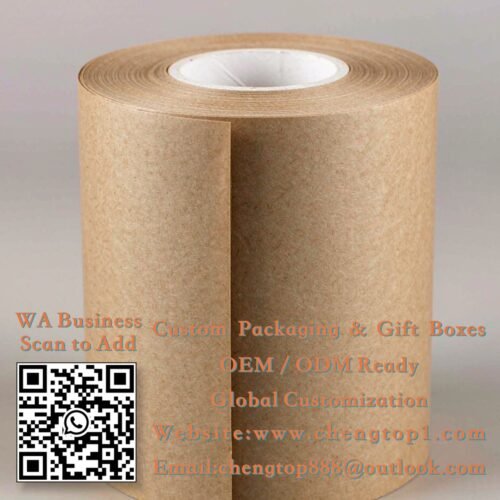
A roll is a continuous web of release liner wound around a core. Typical core diameters are 25, 40 or 76 mm, with a 2–4 mm gap between die-cut labels and 500–2,000 labels per roll; outer diameter is usually capped around 200–300 mm so the roll fits the applicator. The unwind direction matters just as much: a machine that peels top-first will not read a roll wound bottom-first, and no amount of machine adjustment fixes a roll made the wrong way round. Confirm direction, core size and maximum outer diameter with whoever owns the applicator before the die is cut.
A sheet is a flat liner, usually A4 (210×297 mm) or a custom size, holding roughly 6–12 die-cut labels. Sheets stack flat in a drawer, are easy to count, and let a small team pick up one label at a time. They suit hand application, retail counters and kits where several designs ship together. The cost is labour: a person applying labels by hand typically manages 200–400 units an hour, while a simple applicator runs 30–120 units a minute. That gap, not the printed label, is what makes the formats diverge in price at volume.
- Roll: 25 / 40 / 76 mm core, 2–4 mm label gap, 500–2,000 labels per roll
- Sheet: A4 or custom liner, often 6–12 labels, stores flat and counts easily
- Confirm unwind direction and core size before the die is made; neither can be corrected afterwards
Minimums, Lead Times and Where Each Quote Saves Money

Both formats share the same production clock: a 1,000-piece minimum per design, samples in 3–7 days, then 10–15 working days of production after approval, with express shipping at 5–7 days and sea freight at 20–40 days. The difference sits in what happens after the carton arrives. A roll needs a machine and a setup, but that setup is paid once across the whole run; a sheet needs nothing but a table, and the labour grows in a straight line with every unit. Below a few thousand units, sheets usually win. Above that, the time saved by a roll tends to outweigh the extra setup and the higher minimum per design.
Storage is the part buyers forget. Rolls should stand on their edge in a cool, dry room — roughly 18–25°C and 40–60% humidity — and stay sealed until use, because a warm or dusty edge can ooze adhesive and jam a peel plate. Sheets should lie flat under light weight; a curled liner makes hand peeling slow and can lift a corner after application. If labels are going to several stores or packing sites, sheets are easier to divide and ship in small quantities. One honest caveat: neither format removes the need for a physical test. Apply a few labels to the real container, leave them 24 hours, then check the corners.
- Sheets usually cost less to start; rolls usually cost less per applied unit at volume
- Store rolls upright at 18–25°C and 40–60% humidity, sealed until use
- Test on the real container and wait 24 hours before approving the run
Artwork and Finishing Details That Behave Differently

Small artwork decisions have different consequences in each format. On a roll, rounded corners reduce edge lift as the web bends over the peel plate, while sharp square corners catch and peel early. A clear liner looks clean on a transparent product but may need a printed registration mark for an optical sensor, so check the machine manual before choosing it. Thick spot gloss or a heavy foil layer can crack under winding tension; if a finish is part of the design, ask for a wound sample rather than a flat proof. Sheets, by contrast, are the natural home for mixed designs — six to twelve different stickers on one liner, one run, one carton.
Format also changes how the rest of the packaging set is packed. A seal label meant for a custom paper bag handed out at several counters is easier to distribute as sheets; a coded seal applied on a line belongs on a roll, which is how serialised holographic security stickers are normally supplied. Decide these in one proofing round. Splitting the label, the bag and the seal across three approvals is how a tidy kit ends up with a label that will not feed.
There is no format that suits every order. If you pack 400 jars a week by hand, a roll and an applicator are an expense with no payback. If a contract packer runs your product, ask them to specify the roll before you ask us for a quote — the four numbers they give you, core, gap, direction and outer diameter, are worth more than any price comparison at that stage.
Ready to Choose a Format?
Tell us your container type, daily output and whether labels go on by hand or machine — we will reply with a roll or sheet recommendation, a free artwork check and a quote within 24 hours. Samples take 3–7 days, production 10–15 working days after approval, express 5–7 days and sea freight 20–40 days.