Custom Thank You Cards: Handwritten Feel or Printed Text? What Each Choice Costs
The same sentence of thanks can be printed on 1,000 cards or written by hand on 100 — and the two are different products, not different moods. Handwriting costs time and consistency; printed script costs layout discipline. Choosing the wrong one is more expensive than choosing the wrong words. Here is how to decide before the proof is made.
Request a Quote
Enter the quantity you need and add to your quote list for pricing inquiries.
Description
Most brands swing between the two options instead of choosing one. A handwritten note feels personal, so an intern writes 300 of them the week before a launch and the last 50 arrive barely legible. A fully printed card feels efficient, until customers post photos of five identical cards and the “personal touch” quietly stops being one. The root of the problem is that nobody costed the handling time. A handwritten line takes 20–40 seconds per card, which is 8–11 hours at 1,000 cards — that is a person for two working days, every order. This guide compares the two routes on paper, type and blank space, so the decision fits your order volume rather than your mood. Our custom thank you cards are produced both ways, and the specs differ more than most buyers expect.
What a Real Handwritten Line Actually Costs You
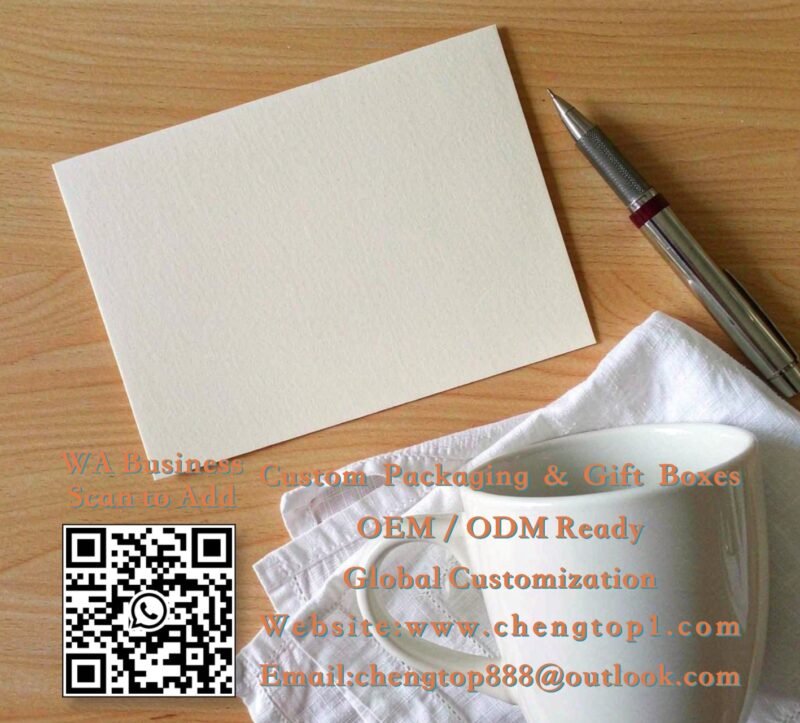
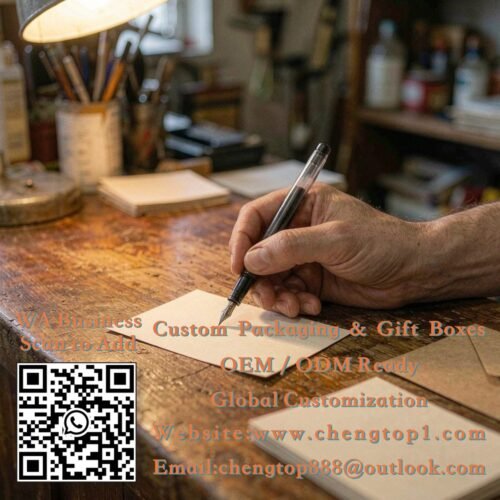
Genuine handwriting earns its place when order volumes are low and margins are wide. At 100–200 orders a month, a handwritten line is sustainable and photographs well; at 1,000 it becomes a production bottleneck with a human error rate. Consistency is the hidden cost: ink shade drifts between pens, pressure varies through a long evening, and one misaddressed card cannot be swapped out of a printed run. If handwriting stays in the plan, protect it with rules — one pen model bought in bulk, a 0.5–0.7 mm tip that suits most card stock, and a rule that tired writers stop and print instead. The uncoated 300–350 gsm stock that printing prefers is also the surface that takes ink well, so the paper choice does not have to change.
There is a middle path that most large senders settle on: print everything except the signature. The body text is typeset, and a 25–30 mm signature line at the bottom carries the only handwriting. That single line takes 3–5 seconds per card, scales to any volume, and delivers nearly all of the perceived personal effort — customers read the signature, not the paragraph. It also survives staff changes, because a new writer only has to sign, not reproduce a house style.
- Handwrite when volumes are under a few hundred a month; print above that
- Budget 20–40 seconds per card for a full handwritten line, 3–5 seconds for a signature
- Standardise one pen model with a 0.5–0.7 mm tip and keep spares with the card stock
Script Fonts That Read as Handwritten Without the Hand
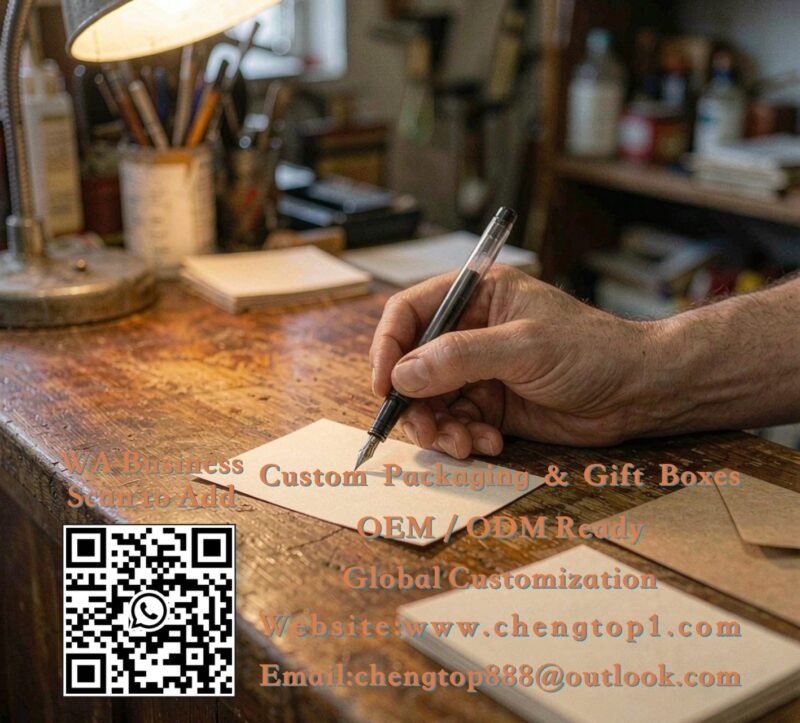
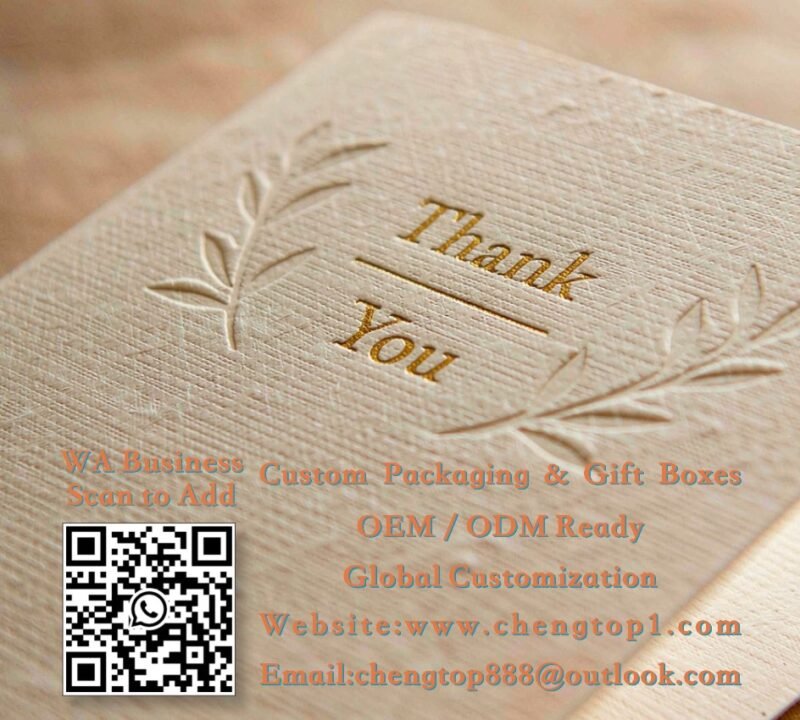
Printed script has one job: avoid looking uniform. A convincing script font has contextual alternates — the same letter drawn several ways and swapped automatically as the text runs — plus a slightly uneven baseline and joining strokes that connect plausibly. Fonts without those features print as visibly mechanical, and no finish rescues them. Keep script at 8 pt or larger, because the fine strokes and joins below that size fill in on uncoated paper, and be cautious with foil or letterpress on script text: below about 8–10 pt the connections between letters break up first, which is exactly where the illusion lives. Supply the font as a licensed file and have it outlined in the final PDF, then check a physical proof under shop lighting rather than judging the type on screen.
Mixed layouts do the quiet work. Pair a printed script greeting with a typeset sans or serif for any practical information — codes, terms, social handles — so the script carries emotion and nothing that must be read precisely. If the design needs variable names, keep them in a clean typeface rather than script: variable script printing shows every mismatch in stroke weight between the pre-set text and the injected names. A pre-production sample with a real name in it settles that question in the 3–7 day sampling round, before the 10–15 working day run begins.
- Choose script fonts with contextual alternates and an uneven baseline
- Keep script at 8 pt or larger; 8–10 pt minimum under foil or letterpress
- Print variable names in a clean typeface, never in the script
Blank Space Is a Design Decision, Not an Empty Area
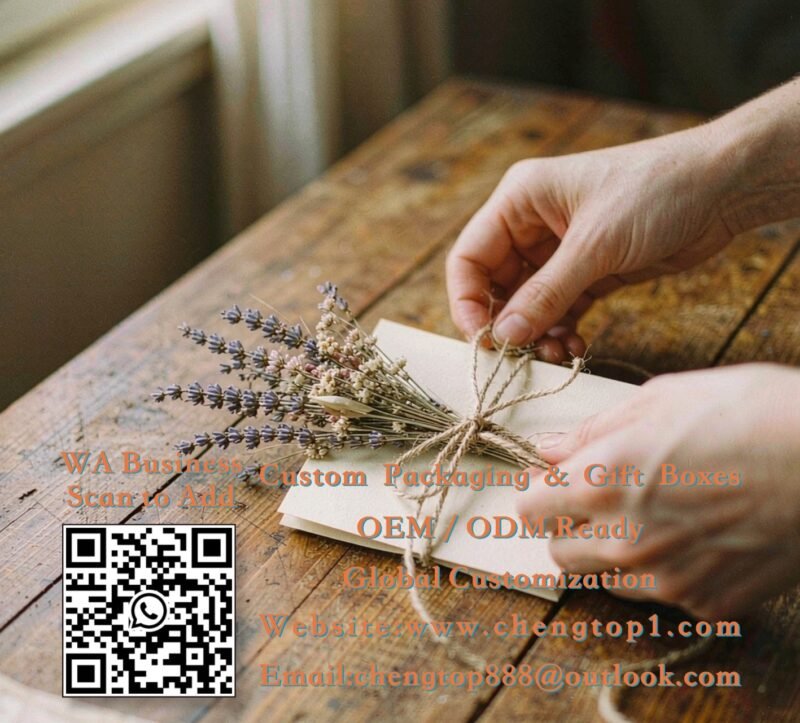
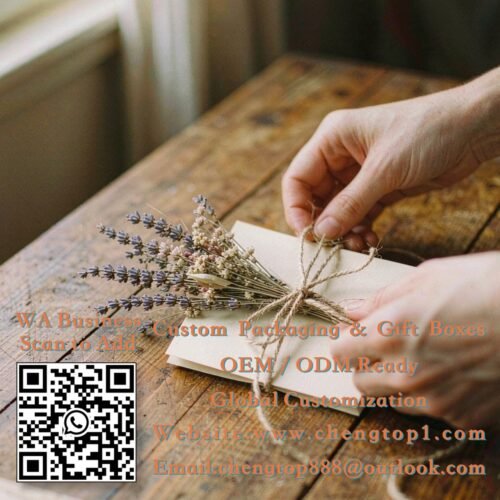
If a hand will touch the card after printing, design for it. A card intended for writing keeps 30–40% of its front or inner surface empty, with a faint printed rule line where the message goes — the line invites writing and quietly controls where it lands. Paper matters as much as layout: uncoated 300–350 gsm takes fountain and gel ink cleanly, while a heavily coated or laminated surface makes ink sit on top, smudge in transit and refuse to dry on a humid day. Test the actual pen on the actual stock in the sample round; a 2-minute test prevents 1,000 smudged cards. Texture extras — twine, a sprig of dried flowers, a custom sticker sealing the fold — add the handmade signal without adding handwriting, which is why they show up so often on small-brand packaging photography.
None of this decoration needs to be fragile. Twine and dried botanicals add almost nothing to the parcel weight but they do add a packing step, so cost that step the same way you costed the writing: if it adds 10–15 seconds per order, it needs to earn its place at your volume. For most mid-volume brands the honest answer is a beautiful printed card with one blank writing area — customers, staff and the production schedule all get what they need. Our thank you card range, like our custom paper bags, is designed to be finished by hand at exactly that point: the factory does the repeatable part, the sender does the 3–5 seconds that read as personal.
- Reserve 30–40% of the writing face as blank space with a printed rule line
- Use uncoated 300–350 gsm stock and test the actual pen on the sample
- Cost twine, botanicals and sealing steps in seconds per order, not in sentiment
FAQ: Handwritten vs Printed Thank-You Cards
What is the MOQ for printed custom thank-you cards?
Most custom card orders start at 500 to 1,000 pieces for a first run, with a lower unit cost at larger quantities; the minimum shifts with card size, stock, finishing and any die-cut or perforation. custom thank you cards For a first launch we can quote a tiered MOQ that covers your opening run without leaving you with spare stock.
When does a printed card beat a handwritten note at scale?
A digital or printed proof usually takes 3 to 5 working days after artwork confirmation, and bulk card production runs 7 to 12 working days once the sample is approved. Perforation, foil stamping or special stocks add a little time, so send both the card and any matching packaging target dates. custom thank you cards
Which finishes add a handcrafted feel to printed cards?
For handwritten feel versus printed text on cards, a 250–300 gsm uncoated or matte stock prints cleanly and survives folding and fulfilment handling; we match the weight and finish to how the card is handled and where it sits in the box. custom paper bags
Can cards match our boxes, seals and inserts?
Send your logo vector file, Pantone or CMYK references and the card dimensions. We check contrast, minimum text size and any QR or barcode legibility before press, and adjust the layout where one language or panel is too tight. rigid gift boxes and stickers and labels
How long does printed card production take?
The cards print to match your other packaging so the whole unboxing reads as one brand; ordering the set together keeps paper colour and finish consistent and usually improves the price per piece. custom thank you cards
Ready to Choose One Route?
Tell us your monthly card volume, whether the message will be printed, written or both, and your preferred size and stock — we will reply with a layout suggestion, a free artwork check and a quote within 24 hours. Samples take 3–7 days, production 10–15 working days after approval, express 5–7 days and sea freight 20–40 days.