

Hand-Applying Labels vs Automating: The Efficiency Math for Labeling Your Packaging
Hand-applying labels works fine at 200 boxes a month — and quietly breaks down somewhere past a couple thousand, when crooked placement and labour hours start showing up in the numbers. This article walks through where the crossover point usually sits, what entry-level automation actually costs, and the label specs that make application easier whichever route you take.
Request a Quote
Enter the quantity you need and add to your quote list for pricing inquiries.
Description
Most brands start labeling by hand because it requires no equipment, no setup and no commitment — just a stack of custom labels and someone with a thumbnail. That works until volume grows and the same hand process starts costing hours, producing crooked labels that end up on social media, and turning every big order into a weekend of sticker work. The good news is that the step from hand application to assisted and automated application comes in small, cheap increments rather than a factory-scale leap. This article maps the three levels, the volume where each starts paying, and the print specs that decide how smoothly labels go on regardless of who or what applies them.
Where Hand Application Stops Being Cheap: Follow One Label Through the Process
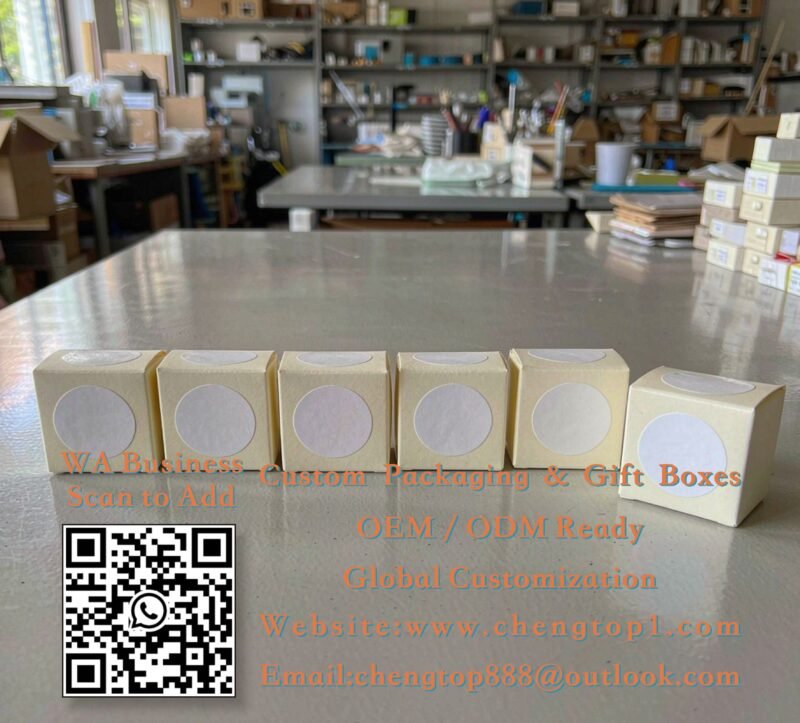
Time a hand application honestly and it usually runs 5–10 seconds per label once peeling, positioning and smoothing are counted. That sounds trivial until it multiplies: 2,000 boxes at 8 seconds is four and a half hours of skilled labour per run, repeated every month, with fatigue-driven drift in placement as the hours accumulate. Consistency degrades before speed does — by label five hundred, positions wander by a few millimetres, and the row of finished boxes starts telling on the person who applied them. There is also a quality tax: each hand-applied label risks bubbles and wrinkles that a machine’s roller would have pressed out, and redoing a misapplied label often lifts the box surface coating with it.
A simple way to find your own crossover point:
- Count the labels applied per week and multiply by your true seconds per label
- Price those hours at loaded labour cost, not minimum wage
- Compare the monthly total against the rental or amortised cost of an applicator
Three Levels of Automation — and What Each Actually Costs to Try

Automation is a ladder, not a switch. Level one is a manual label dispenser: roll labels mounted on a spool that presents each label with the liner peeled, so the operator just picks and places — it removes the liner fight and typically cuts application time roughly in half, for a cost closer to a nice office chair than a machine. Level two is a semi-automatic tabletop applicator: place the box, press a pedal, the label applies with a consistent roller stroke; these handle round and rectangular labels on boxes and lids well and pay for themselves somewhere in the low thousands of labels per month. Level three is a full labelling head integrated into a packing line, which makes sense at volumes where an operator’s wages exceed the machine’s amortisation every quarter. Whatever the level, order roll labels rather than sheet labels — rolls feed dispensers and applicators directly, while sheets force someone to pop labels out of backing one by one, which quietly reintroduces the seconds you just automated away.
Label Specs That Make Application Easier — by Hand or by Machine

Application success is decided at the design stage more than at the bench. Rounded corners on rectangular labels reduce the corner lift that starts most wrinkles, on curved jar and lid surfaces in particular. Release liner strength matters: a liner that releases too easily means labels arrives half-peeled in transit, while one that grips too hard fights the operator — ask your printer to match release force to your application method. For machine work, specify the winding direction and roll core size so the label presentation matches the applicator’s feed, and keep die-cut shapes reasonably stiff; paper-thin film shapes fold over on themselves when a picker lifts them. Larger labels over about 100 mm in the longest dimension benefit from centre-out application guides whether a hand or a roller is doing the pressing, since bubbles form from the edges inward on broad labels.
When Hand Application Is Still the Right Answer
Automation is not a virtue in itself, and several situations still favour hands. Small runs under a few hundred units never recoup any equipment cost. Fragile or irregularly shaped packaging — soft gift boxes, curved lids, textured kraft — often applies better under a human eye than a machine’s fixed roller. And brands with many SKUs and small batches per SKU spend more time changing machine setups than the machines save. The honest pattern across most growing brands is a mix: machine-applied identity labels on the standard range, hand-applied placement for limited editions and gift sets where a deliberate, slightly crafted look is part of the product. Judge the mix by the labour-hours line in your fulfilment cost, and revisit it whenever volume doubles — the crossover moves faster than most brands expect.
Ready to Make Labeling Faster?
Send us your label size, packaging surface and monthly volume — we will recommend roll format, liner and shape, run a free artwork check and reply with a quote within 24 hours.