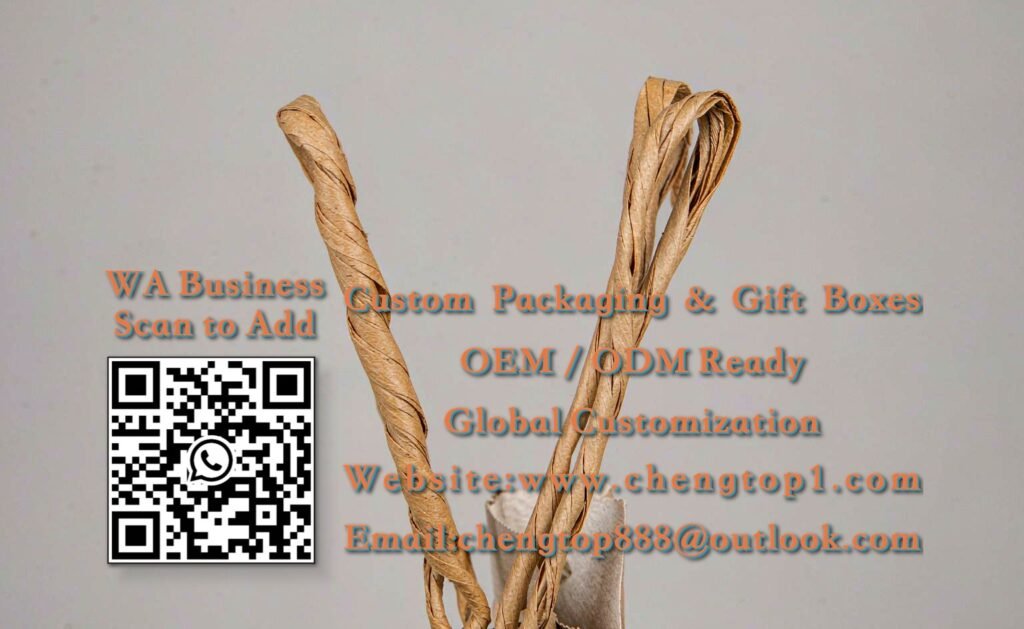
Twisted Paper Handles: Twist Density and Grip
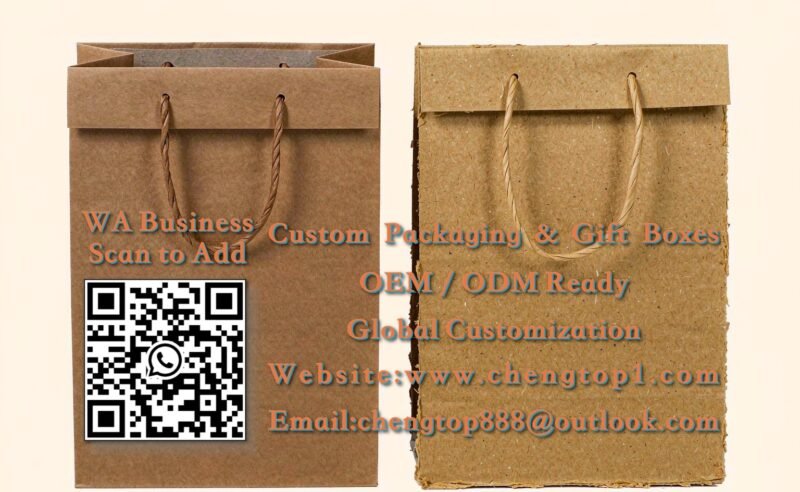
Twist density changes how a paper handle feels in the hand and how it sits against the bag when the bag is empty. A tight twist holds a round section and grips well, while a loose one flattens and can crease at the knot behind the patch. Handle length has to clear the top turn-over with a gloved hand, so check it on a loaded bag rather than on a swatch.
اطلب عرض أسعار
أدخل الكمية التي تحتاجها وأضفها إلى قائمة عروض الأسعار الخاصة بك للاستفسار عن الأسعار.
الوصف
A paper handle is specified by colour and length more often than by how it is twisted, yet the twist decides how it feels in the hand and how it sits against the bag panel. A loose twist flattens under load and creases at the knot behind the reinforcement patch. A tight one keeps a round section and grips well, but uses more paper per metre.
Twist Density and Hand Feel
Twisting a paper cord compresses the fibres into a firmer, rounder section. More turns per metre give a handle that holds its shape when the bag is set down and picks up less of a crease at the fold over the bag rim. Fewer turns leave a softer cord that flattens between the fingers, which some brands prefer for a light garment bag but which feels less secure under a heavy rigid box.
The paper itself has a say. A long-fibre kraft takes a tight twist without splitting, while a recycled sheet with shorter fibres can break along the cord when it is twisted hard. Ask for the handle to be made from the same stock family as the bag so the colour and the fibre behaviour stay consistent.
Length, Clearance and the Gloved Hand
Handle length has to clear the top turn-over with a hand through it, and a winter glove adds more room than most samples allow. A short handle pulls the top panel into a curve and puts extra load on the patch; a long one swings against the printed front panel in transit and can leave a rub mark. Set the length with the bag height and the turn-over depth on one drawing.
The knot or the glued end sits behind a reinforcement patch. A bulky knot presses through a thin wrap and reads as a bump on the outside of the bag. A flatter end attachment spreads that pressure, which matters on a coated or soft-touch surface where a mark shows easily.
Load Path Into the Patch
The whole bag hangs from two punched holes. Twist density changes how the cord beds into that hole, and a hard round cord can cut into the board edge over a long carry. The patch has to be sized for the cord as well as for the product weight. The أكياس ورقية range covers rope, twisted paper and die-cut handles, and the الملصقات والبطاقات range is useful where a small brand mark sits near the handle area.
Colour and Finish Consistency
A dyed twisted cord reads lighter than a flat swatch of the same dye, because the round section catches light on one side. Where the handle is meant to match a printed band on the bag, approve the two together on a finished sample under retail lighting. A slight difference is normal; a visible mismatch draws the eye to the handle rather than the artwork.
Checks on a Finished Handle
- Carry a loaded bag for a short distance and look for a flattened section in the hand.
- Try a gloved hand through the handle over the top turn-over.
- Feel behind the patch for a bulky knot pressing through the wrap.
- Inspect the punched hole after a long carry for a cut into the board edge.
- Compare the cord colour with the printed band under store lighting.
Where the bag is shipped flat, handles are tucked inside the fold. A tight twist holds a curve that can press a line into the printed front panel during a long spell in the carton. Fold a packed sample flat, leave it under a light load, then open it and look at the front panel under raking light before the run is approved.
Send the bag size, the product weight and the handle style when you ask for a quote. With the twist, the length and the patch settled together, the handle feels comfortable and the bag keeps its shape on the way out of the store.