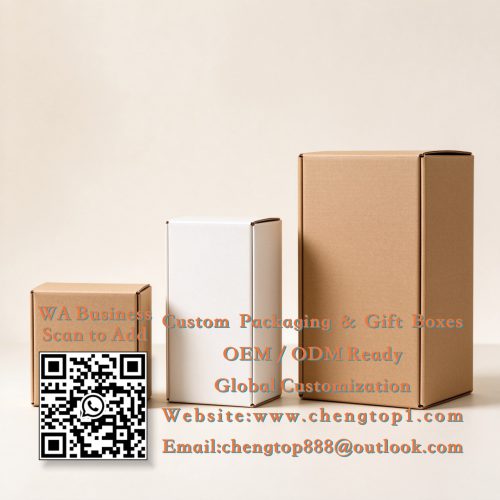
Cosmetics brands rarely live on a single box format. A typical line pairs everyday folding cartons with rigid gift boxes for sets and gift-season SKUs. Coordinating the two — structurally and visually — is what separates a brand from a collection of products.

Map Formats to Product Tiers
- Daily essentials (cleansers, masks, lip care): printed folding cartons with spot UV or soft-touch lamination keep unit costs sharp at volume.
- Serums and hero SKUs: heavier cartons with foil-stamped logos, or entry-level rigid boxes with fitted inserts.
- Gift sets and holiday editions: magnetic closure rigid boxes or drawer boxes with EVA or velvet interiors.
- Refill pods: minimal cartons in the same visual language as the parent case.
The Consistency Checklist
Color drift between cartons and rigid boxes is the most common quality complaint in cosmetics packaging. It happens because different materials and print processes shift the same Pantone slightly. Prevent it by asking your factory to produce cartons and boxes on the same press runs, with color bars checked against one approved standard — and by requesting cross-format photo proofs before mass production.
Structure Serves the Routine
Think about the customer’s shelf, not just the parcel. Rigid boxes sized to display open (lid under base) double as vanity organizers. Cartons with die-cut windows let texture and color sell the product. Inserts should present the hero item first — the product customers photograph is the one positioned front and center.
Cost Logic Across the Line
A practical ratio many brands use: cartons for 70–80% of SKUs, rigid boxes for 20–30% of gift-driven volume. That balance keeps average packaging cost low while the premium boxes do the brand-building work where it counts.
Chengtuo Packaging is a custom packaging factory in China specializing in rigid gift boxes, folding cartons and printed paper packaging. For OEM & ODM inquiries, contact us at chengtop888@outlook.com or visit www.chengtop1.com.