Among jewelry packaging formats, the drawer box earns its premium for one reason: the reveal. The slide-open motion slows the moment down — and with the right engineering, it survives hundreds of opens as a keepsake box.
How a Drawer Box Is Built
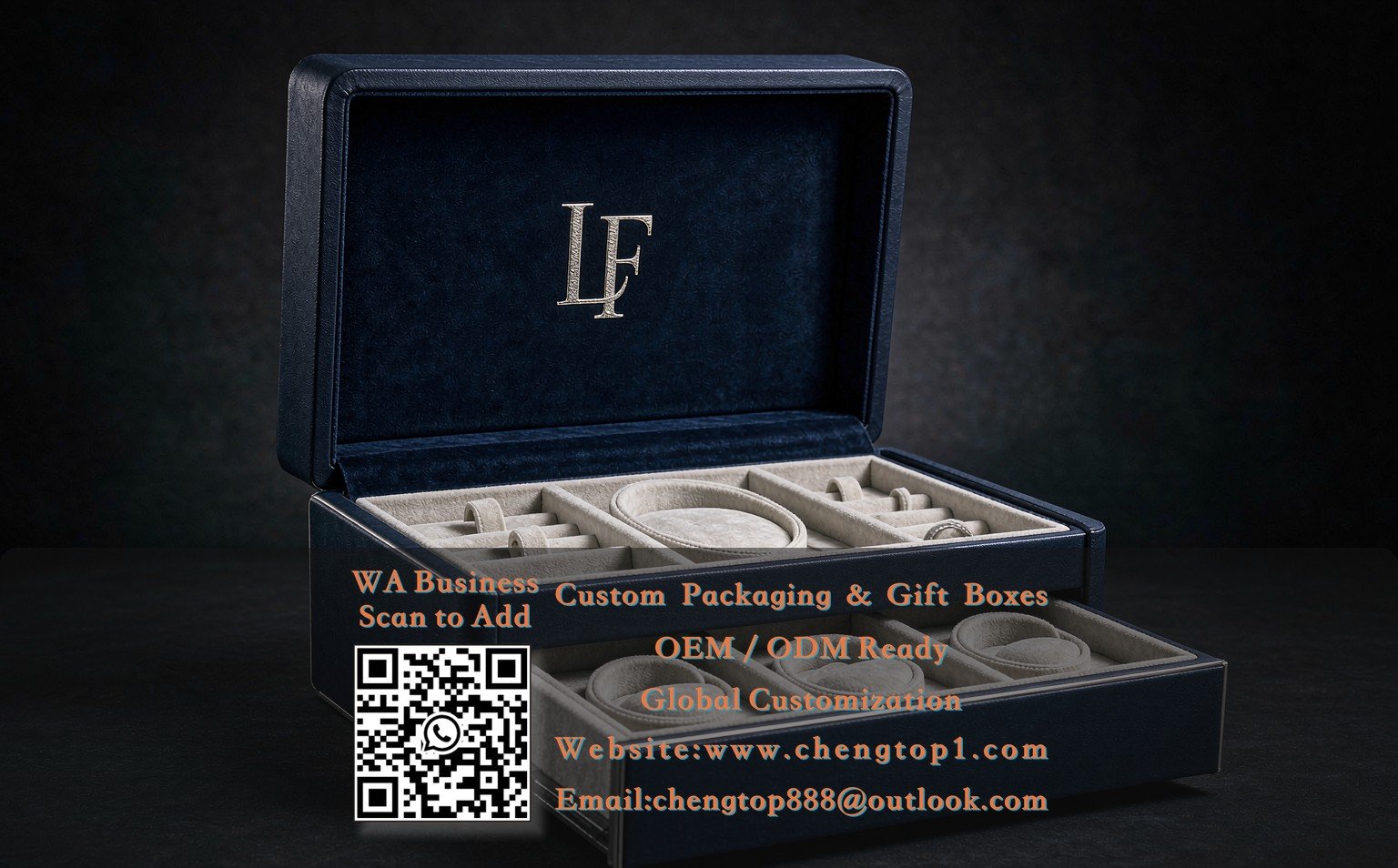
Two components define the format. The outer sleeve is a rigid shell of greyboard wrapped in printed or specialty paper. The inner drawer slides within it, guided by the sleeve’s walls. A ribbon pull, thumb notch or die-cut finger hole completes the opening experience.
Insert Options by Jewelry Type
- Rings and studs: slotted foam or velvet-covered inserts with parallel channels.
- Necklaces: deep trays with hook-and-slot tops to keep chains untangled.
- Bracelets and sets: molded cavities or modular trays that present multiple pieces at once.
- Premium lines: silk or suede lining over dense foam — the touch test decides the sale.
Finishes That Work Hardest in Jewelry
Deep matte lamination with foil stamping remains the workhorse. Soft-touch coatings invite handling; debossed logos add tactility without shine competition; interior printing turns the inside lid into brand real estate. For sustainable positioning, uncoated recycled board with one-color printing is increasingly accepted at premium price points.
Engineering Details That Decide Quality
The slide must be smooth but not loose: ask your factory about tolerance standards between sleeve and drawer. Check ribbon anchoring (it must survive a hard pull), and confirm the tray does not lift out accidentally when the drawer opens. These three details are where cheap and premium drawer boxes part ways.
Chengtuo Packaging is a custom packaging factory in China specializing in rigid gift boxes, folding cartons and printed paper packaging. For OEM & ODM inquiries, contact us at chengtop888@outlook.com or visit www.chengtop1.com.