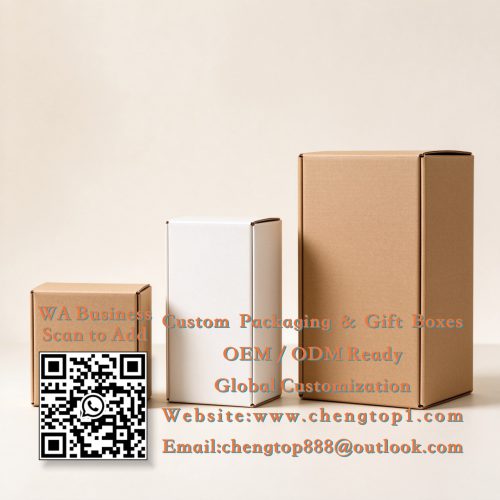
Between prototyping and mass production lies a crucial intermediate step: the “trial run.” This involves running a small batch through the actual production line to verify parameters, cutting dies, and workflows before committing to full-scale production. This article explains the small-batch trial run process for packaging boxes in a way that custom-order clients can easily understand.
How is the “first article” confirmed? During the trial run, the first unit produced at each stage must be inspected against the approved sample for dimensions, color, and structure. If the first article fails inspection, the line stops so parameters can be adjusted. Confirmation is based on strict adherence to the approved sample.
A trial run isn’t just a formality; it’s an insurance policy for mass production. The cost of a few dozen boxes buys peace of mind for tens of thousands of units—a calculation anyone experienced in foreign trade understands well.
How long does a trial run take? The duration depends on manufacturing complexity: standard box types take a few days, while complex designs (involving multiple processes) take about a week. Mass production is scheduled only after the trial run succeeds. To determine the timeline, simply ask the manufacturer about their trial run schedule.
What parameters are set? The trial run is used to lock in production parameters: printing (ink, pressure), die-cutting (pressure, speed), and paper mounting (glue volume, flattening time). These parameters must be recorded and reproducible. Standardization is achieved by formally documenting these settings.
What exactly is a trial run? It is a pilot run or small-batch production phase using actual manufacturing processes and materials to produce a limited quantity (dozens to hundreds) of boxes. Its purpose is to identify mass-production issues that wouldn’t appear during prototyping. Essentially, it serves as a “dress rehearsal” before the main production run.
What happens if issues arise during the trial run? Identifying problems is the very purpose of a trial run; correcting dimensional deviations, color variances, or structural flaws at this stage is cost-effective. Issue resolution requires a closed-loop process (re-testing after adjustments). Success is defined by passing re-inspection after corrective actions are taken.