Every die-cut box is made to a drawing and every drawing assumes a precision the process does not quite deliver. That gap – measured in fractions of a millimetre – is why a sample insert sometimes fits a sample box and a production insert sometimes does not. Understanding where variation comes from turns an argument into a specification.
What tolerance is normal on die cutting? Typically around plus or minus 0.5mm on cut dimensions for folding cartons, and closer to plus or minus 1mm on crease positions, because creasing depends on board thickness and the rubber on the die. Rigid boxes assembled by hand carry wider variation again, since wrapping and corner folding add their own spread. Any number tighter than that needs a conversation, not an assumption.
Why does the same die produce different boxes? Board caliper varies between deliveries, and a die set for 350gsm runs differently on 340gsm. Creasing rubber compresses with use, so a die near the end of its life creases differently from a new one. Press operators adjust packing and stripping to keep the sheet running, and small adjustments accumulate across a run.
Which dimensions matter most? Internal dimensions, measured after folding, because that is what the product experiences. External dimensions matter for pallet and shelf fit; they include board thickness and can be misleading if quoted alone. Specifying which one you mean on the drawing prevents most fit disputes before they happen – the vocabulary is set out in the packaging terminology guide.
How does board thickness change fit? A carton folds around its own thickness. Two panels joined at a crease do not meet at a right angle but curve around the board, and the inner dimension shrinks by roughly one board thickness per fold. On a small box in heavy board, three folds can consume a couple of millimetres – which is enough to make a snug product tight.
Does grain direction affect tolerance? Yes, and it is the most commonly overlooked factor. Board folds cleanly along the grain and cracks or bulges across it. A dieline imposed so that a critical fold runs across the grain produces a box that measures correctly and closes badly, with a swollen spine and a lid that will not sit flat. Grain direction belongs in the specification, not in the printer’s discretion.
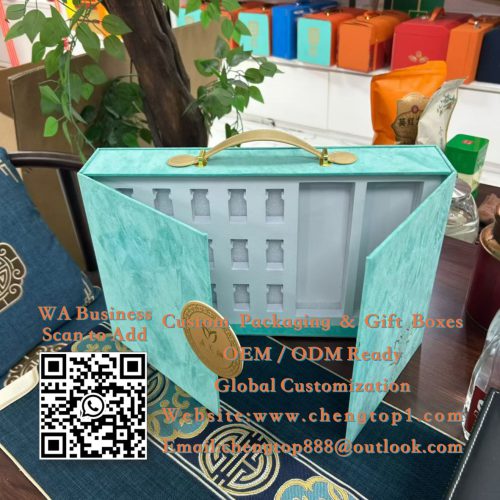
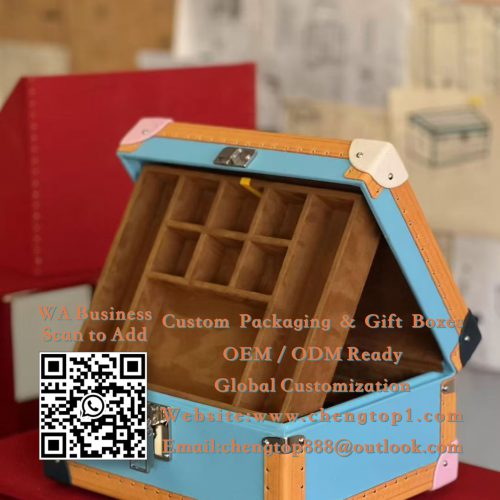
How tight can an insert be? Tighter than a box, but not much. Inserts are usually die-cut from foam, pulp or board and sit inside a box that itself carries tolerance, so the two spreads add. Designing an insert to touch all four walls with zero clearance is how you get inserts that will not seat on a humid day. A small designed clearance, with the product held by the insert rather than the walls, is the reliable pattern.
What causes a lid that will not close? Usually one of four things: the crease position drifted, the board is thicker than specified, the grain runs the wrong way, or the internal dimension was calculated without accounting for board thickness. All four are visible on a physical sample, which is why a pre-production sample is worth the days it costs – the reasoning is in the sampling and inspection guide.
Should I put tolerances on my drawing? Yes, on the dimensions that matter to assembly, and leave the rest unspecified. A drawing with a tolerance on every dimension invites a factory to inspect everything and argue about nothing important. Mark the internal dimension, the panel that must sit flush, and the insert cavity; let the rest be nominal – the drawing conventions are covered in the dielines, mockups and renders guide.
What about hand-assembled rigid boxes? Expect wider spread, and design for it. Corner wrapping, lining and magnet placement are manual operations, and a 1mm variation between units is normal. Where two rigid boxes must sit flush in a set, or a lid must align with a printed band, build in a visual allowance rather than chasing a tolerance the process cannot hold.
How is tolerance verified? By measuring production samples against the drawing at the agreed points, ideally with a calibrated gauge or callipers rather than a ruler. Inspection plans normally sample across the batch and record actual values, and the acceptance logic is described in the QC and acceptance FAQ.
If a fit problem is already happening, send us the drawing, the failing sample and the measurement you expected – we will tell you whether it is a die issue, a board issue or a tolerance that was never achievable. Start with the quote request page.
Chengtop die-cuts cajas plegables, rigid boxes and inserts at our Wuhan plant, and we return a checked dieline with dimensioned internal sizes before tooling is cut. Message us with the product dimensions and we will confirm the clearances.