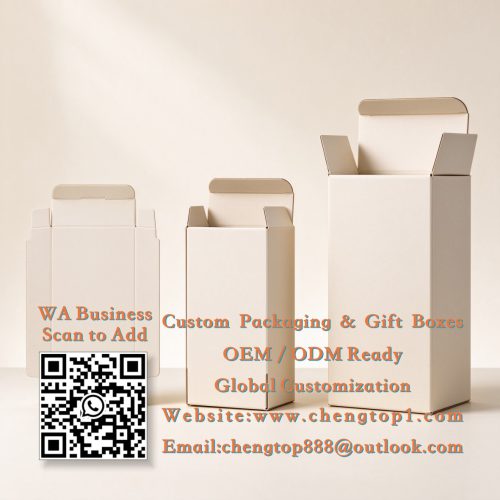
A box that photographs perfectly can still stop a filling line. Cartons are erected, filled, closed and packed by machines that expect a narrow band of stiffness, friction and geometry, and a supplier who never sees your line is working from an incomplete brief. Most “the boxes will not run” complaints are specification mismatches that could have been settled in the quotation.
Why do boxes fail on automatic lines? Usually because the board is too soft to erect cleanly, too stiff to crease without cracking, too slippery to feed, or dimensioned so the flaps do not overlap where the machine expects. Occasionally the cause is moisture: board that has absorbed water during shipping drags in the magazine and jams – the mechanism is described in the board moisture guide.
What machine details should I give a supplier? The machine type – cartoner, case erector, case packer, wrap-around – and ideally the model. Magazine capacity, speed range, glue or tuck closure, and the smallest and largest carton the machine is set for. A photograph of the magazine and the closing section answers more questions than a page of description.
How does board choice affect running? Stiffness governs how a carton springs open and holds shape in the magazine; friction governs how it slides and separates. A heavier board that feels premium on a shelf can be too stiff for a high-speed cartoner’s vacuum pick, while a lighter board can collapse under the compression of a case packer. The board grade is a machine decision as much as an aesthetic one.
What about the closure type? Tuck-end, crash-lock, auto-bottom and glue-flap cartons each suit different machines. Crash-lock bottoms need a specific crease pattern and enough board memory to lock reliably; auto-bottom cartons must open squarely or the machine jams. Choosing a closure the line was not built for is a common and expensive mismatch – the formats are compared in the box bottom structures guide.
Does grain direction matter to a machine? Considerably. Cartons fed with the grain running the wrong way resist the fold the machine is trying to make, and the result is cracked spines, misaligned flaps and intermittent jams that appear random until someone checks the imposition. Grain direction is a printer-side decision that becomes a customer-side problem, so it belongs in the specification.
How can I test compatibility before ordering? Ask for a pre-production sample run of a few hundred pieces and put them through the line at production speed, not by hand. A sample that erects neatly by hand tells you little about a magazine feed. If a trial is impractical, at minimum send the machine details and a physical sample of your current box so the supplier can match stiffness and caliper.
What changes when a product is new to the line? Everything downstream of the box: filling nozzles, product guides, closing rails and the take-away conveyor are all set for a dimension range. A box 3mm taller than the last one may need a machine adjustment that takes a shift. Telling the supplier the machine’s current range, rather than only the new box size, avoids designing a pack that needs a line change.
Do windowed or foil-stamped cartons run differently? They can. Window film adds local stiffness and can bow a panel; heavy foil coverage changes friction and can make cartons stick in the magazine. Neither disqualifies a design, but both are worth flagging so the board grade can be adjusted to compensate – the finishing options and their effects are covered in the surface finishing comparison.
What about hand-packed operations? The constraints shift to ergonomics and speed: how quickly an operator can erect a box, whether the closure is intuitive, whether the pack needs tape or glue. Hand packing tolerates looser tolerances and rewards simpler structures, which is worth knowing before specifying a complex crash-lock design for a small workshop.
If you can send the machine type, the current box and the running speed, we can quote a structure that suits them rather than a structure that looks right. Use the quote request page and note the line details.
Chengtop supplies cajas plegables, corrugated cases and retail cartons from our Wuhan plant to customers running both automatic and hand-packing lines. Message us with the machine model and we will confirm board and closure options.