

Linings and Closures for Custom Paper Bags: Private, Protected and Presentable
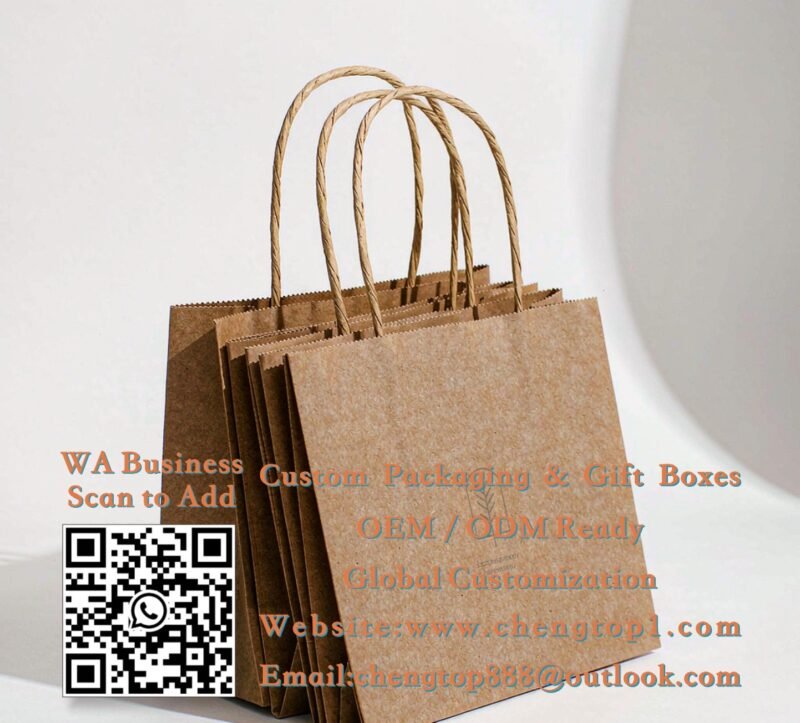
Brands spec paper bags down to the gsm and the handle type, then leave the top of the bag — the part every customer actually touches — to chance. An open bag flaps shut on the walk home, shows its contents to the street, and looks half-finished at a gift counter. This guide covers the lining and closure options that turn a carry bag into a finished package.
Solicitar un presupuesto
Introduce la cantidad que necesitas y añádela a tu lista de presupuestos para solicitar precios.
Descripción
Ask a buyer what they checked when they approved a custom paper bag sample and the answer is usually paper weight, handle type and print. Rarely anything about the top edge. Yet that top 5 cm decides how the bag behaves from the counter to the customer’s door: whether it stays closed on a windy pavement, whether the contents stay private, and whether it reads as a finished gift package or a shopping sack. Lining and closure choices also change the unit price less than most specs do, which makes them unusually good value if you plan them before the order rather than retrofitting them with tape afterwards. Here is what the options actually are, and which job each one does.
Lining Options: Bare Kraft, Tissue Insert or a Laminated Inner

Three practical levels of lining cover most needs. The bare bag — 157–250 gsm kraft or art paper with no inner layer — is correct for sturdy, non-precious goods where privacy does not matter. The tissue insert is the volume sweet spot: a sheet or two of 17–30 gsm tissue wrapped around the product adds softness, hides the contents and turns the bag into a gift presentation, at a material cost measured in fractions of a cent and an assembly step of a few seconds. The third level, a laminated or coated inner layer, belongs to bags carrying moisture-sensitive or oily goods — it keeps grease from blooming through the outer print and doubles the bag’s stiffness. Choosing higher means paying for something customers do not notice; choosing lower means paying in returns and embarrassed counter moments instead.
A quick way to place your product on that ladder:
- Boxes, books, sturdy retail goods — bare bag is honest and economical
- Apparel, cosmetics, anything gift-adjacent — tissue insert, two sheets for opacity
- Food, candles, anything oily or scented — coated or laminated inner, no exceptions
Closure Options: What Actually Holds the Top Shut
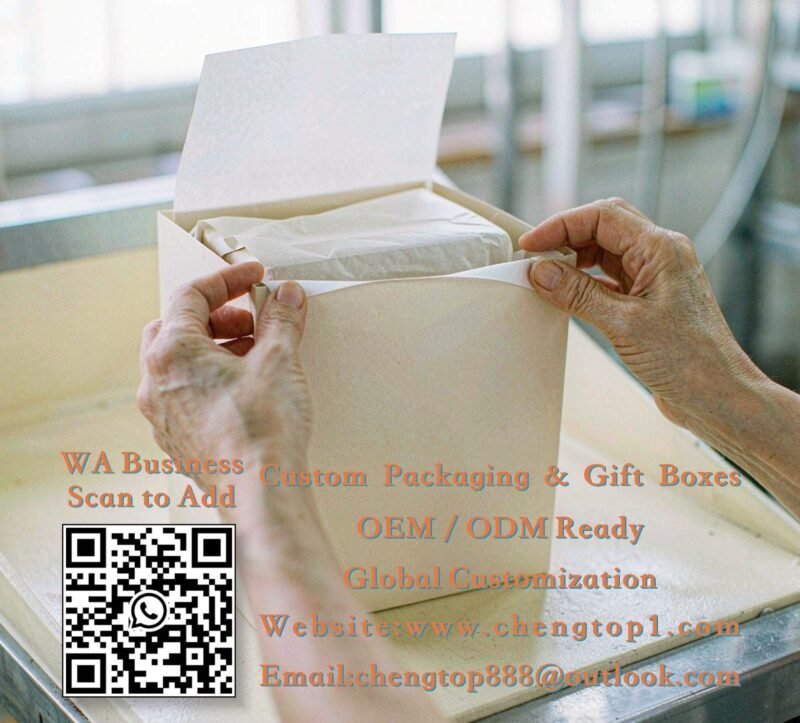
Closures range from structural to applied, and they stack. The fold-over closure needs nothing extra: rolling the top edge down one or two turns uses the bag’s own stiffness to hold it shut, which is why bakeries and boutiques have used it for a century — though it works better on 210 gsm and heavier stock than on 157 gsm that flops back open. The applied closures give security and branding: a sticker seal across the fold doubles as a private-mark and a brand impression, an adhesive tape strip gives a tamper-evident close for ecommerce, and snap fasteners or hook-and-loop dots allow a genuinely resealable bag — worth it only where customers genuinely reopen the bag, such as multi-trip retail carriers. Seals earn their place in gift sets in particular: a sticker closing the tissue and fold together is the step that makes the thank you card tucked inside feel deliberately placed rather than dropped in.
Cost-wise, none of these closures moves the unit price the way paper weight or a foil logo does. A sticker seal adds a fraction of a cent plus a second or two of assembly; fold-over creases are formed during manufacturing and cost nothing at the counter; snaps and hook-and-loop dots are the only ones that add real hardware cost, which is why they stay rare outside fashion retail. Budget should follow the same logic — spend on lining and closure only where the product or the gifting moment justifies it, not as reflexive spec inflation across every bag in the range.
Spec Checklist: Deciding Both Before the Order, Not After

Lining and closure interact with the rest of the bag more than buyers expect, so decide them in the same breath as weight and handles. A laminated inner adds stiffness, which sometimes lets a lighter outer gsm carry the same load — a real cost saving on large bags. A fold-over closure needs the top band free of critical print, since it disappears under the fold; keep the logo below the fold line or accept half of it being hidden. A sticker seal needs a flat band at the finished fold height, which argues against heavily textured art paper in that zone. And production stays the same regardless: 1,000-unit minimum, 3–7 day proofing, 10–15 working days — the decisions cost nothing extra in lead time, only in thinking them through before the proof. Brands uncertain between two combinations should proof both and fold-test each by hand, since paper stiffness at the top edge is a feel spec no data sheet fully captures.
Ready to Finish the Bag Properly?
Send us your bag size, product type and how it is sold — we will suggest a lining and closure combination, run a free artwork check and reply with a quote within 24 hours.