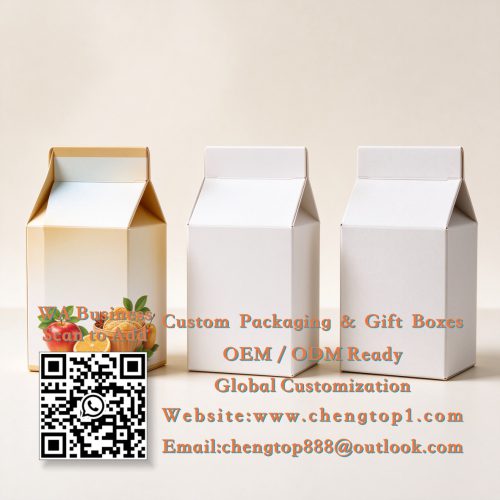
When should you use digital printing? For prototyping, trial orders, small batches, and personalization (such as unique codes or custom names), digital technology makes a “test-before-scale” approach feasible. The opportunity for digital printing lies in low minimum order quantities (MOQs) and rapid iteration.
How do you combine digital and traditional methods? Use digital for prototyping (fast and cost-effective) and offset printing for mass production (stable and economical). Validate the design digitally first, then switch to traditional methods for mass production; the two methods complement each other. The logic behind this combination depends on the order stage.
For the same box design, use digital for small batches and offset for large ones—there is no standard answer as to which is “better,” only which is “suitable.” This article clearly compares digital and traditional packaging printing, helping custom-order clients make informed decisions before placing an order.
How are costs calculated? Digital printing has low fixed costs but high per-unit costs; offset printing involves plate-making fees, but the per-unit cost drops as volume increases. Digital is cost-effective for small batches, while offset is better for large ones. The cost crossover point depends on quantity and design complexity.
How do the colors compare? Offset printing offers superior color stability and saturation (including spot colors and metallic inks). While the color gamut of digital printing is improving, there are still gaps in rendering dark tones and spot colors. When making color decisions, rely on color swatch comparisons.
What is traditional printing? Traditional printing (primarily offset) requires plate-making. It offers high speeds, low unit costs for large volumes, and stable color reproduction, making it ideal for medium-to-large batches and long production runs. The advantages of offset printing are stability and low cost (at high volumes).
Choosing between digital and traditional methods is essentially a trade-off between volume and cost: value digital for its flexibility in small batches, and offset for its stability in large runs. By aligning the workflows for prototyping and mass production, you can balance both cost and quality.
What is digital printing? Digital printing produces samples directly from a digital file, eliminating the need for plate-making and allowing for low MOQs and variable data (such as printing a unique code on every box). It is ideal for prototyping, small batches, and personalization. The key advantages of digital printing are speed and flexibility.