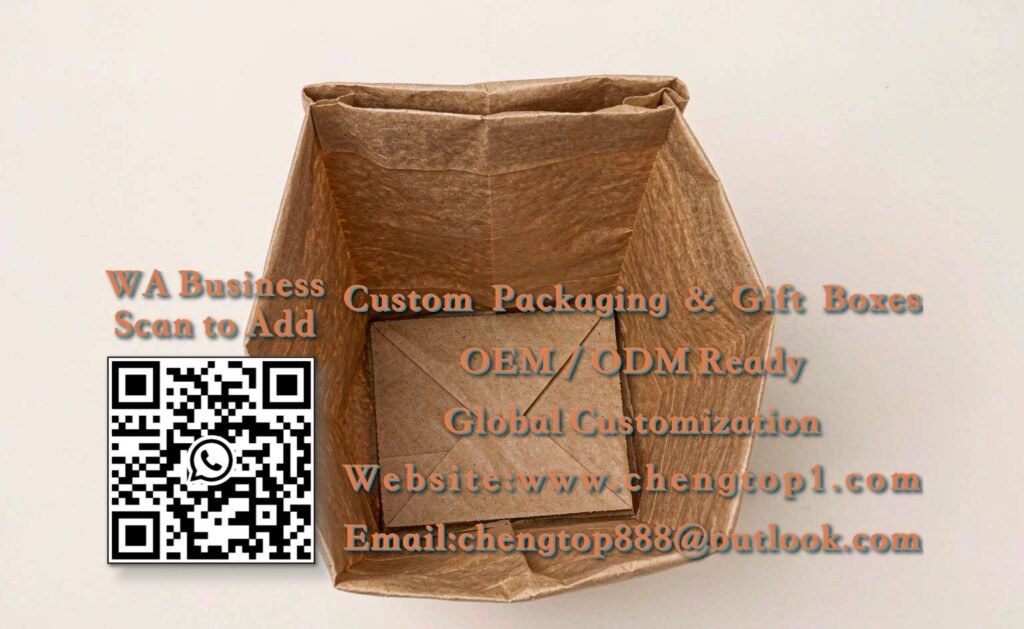
Paper Bag Base Boards: Stiffness at the Bottom Fold
A loose base board lets a paper bag sag into a rounded bottom as soon as a rigid box is dropped in. The board has to be stiff enough to spread the load across the folds, yet thin enough that the gusset closes square. Match it to the weight of the product, and check a loaded bag after it has stood on a counter for a few hours, not just while it is being carried.
Request a Quote
Enter the quantity you need and add to your quote list for pricing inquiries.
Description
Set a rigid gift box into a kraft bag and the base tells you straight away whether it was specified properly. A loose base board bows into a rounded bottom, the side creases pull inwards, and the bag will not stand square on a counter. The board is a small part of the bag’s cost, but it carries the whole load.
Where the Load Actually Lands
Weight from the product passes through the bottom fold into the gusset creases and up to the handle patches. A base board spreads that load across the whole bottom panel instead of letting it collect at one point. A thin board bends between the two long creases, and a thick one pushes the gusset folds out of square when the bag is closed flat. The working range sits between those two failures.
Product shape matters as much as weight. A heavy jar concentrates its load on a small circle; a folded garment spreads it. Where the pack has sharp lower corners, those corners need a little extra clearance or a soft pad so they cannot press a permanent dent into the board.
Board Grade Against the Bag Size
A wide bag needs a stiffer base than a narrow one of the same board weight, because the unsupported span is longer. Instead of moving the whole bag to a heavier kraft, a separate base board in a denser grade keeps the sides flexible and the bottom firm. That also keeps the top turn-over easy to fold, which a heavy all-over sheet would not.
Grain direction on the base board belongs in the specification. A board cut so the grain runs across the short span resists bending better, and the difference shows after a bag has stood loaded for a few hours rather than while it is being carried.
Adhesive and Fold Behaviour
The base board is usually held by a strip of adhesive at the fold or left loose under a folded flap. A loose board can shift in transit and leave one corner unsupported, while a fully glued board can fight the gusset as the bag opens. Check the bag both flat and opened, with the real product inside, and look at how the gusset creases settle. The paper bags range covers both constructions, and the full product range is useful when a bag has to match a rigid box or a carton.
Storage and Handling Before Use
Bags are often shipped flat and stored for weeks before they are filled. A base board that has taken up moisture in a warehouse softens, and a stack of flat bags under a carton can set a permanent curve into the fold. Keep a sample flat under a light load for a spell, then open and load it. That check catches problems a fresh sample will not show.
Checks on a Loaded Bag
- Load the bag with the real product and let it stand on a counter for several hours.
- Look along the bottom fold for a bow between the two long creases.
- Open and close a bag that has been stored flat under a light load.
- Confirm the base board grain runs across the unsupported span.
- Check that sharp product corners cannot press into the board.
A base board is often cut from a different stock lot than the bag itself, so its shade can drift. Where the inside of the bag is visible on a retail counter, agree the board colour on a finished sample. A small difference is easy to live with; a bright white board inside a natural kraft bag draws the eye to the bottom fold.
Send the product weight, the bag footprint and the storage conditions when you ask for a quote. With the board grade, the grain and the fold allowance settled together, the bag stands square on the counter and carries its load without pulling the side creases in.