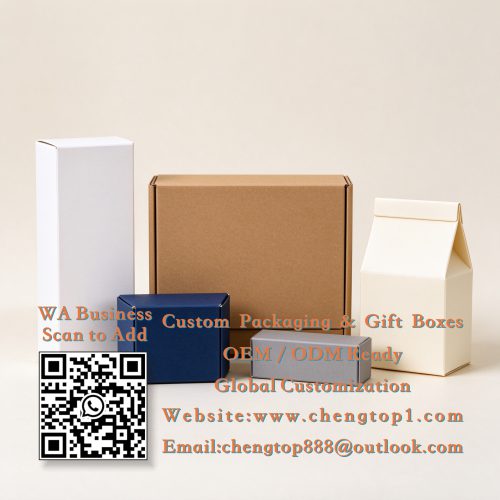
What does a folder gluer do? It takes die-cut blanks, folds them along the creases, applies glue at chosen tabs and ejects a finished box, all in one pass. Printing gives the blank its image and the die cutter gives it its shape; the gluer is where the box becomes a box. Speeds run to hundreds of blanks a minute, which is why the process dominates anything past the smallest quantities.
What is a glue lap and why does its width matter? The lap is the small tab where one side wall overlaps and glues to another, usually the back seam of a straight-tuck or the bottom of a crash-lock. Too narrow and the joint lifts or bursts at the corners; too wide and the box gains calliper where it must fold. The lap width is a die drawing decision made before the gluer ever runs, and changing it later means changing the die.
What is the hook cover? On boxes with hooked closures, the cover is the small extension that keeps the hook engaged after folding. It decides whether the box stays closed on a filling line and opens cleanly by hand. Hooks and covers are specified on the structure drawing together with the lap, and they interact with board calliper: a cover sized for thin board fails on thick, and vice versa.
Why does setup time dominate small runs? Every size change means new folding plates, glue pot positions and feeding settings, and the line produces waste while it settles. A run of a few thousand cartons may spend longer being set up than producing, which is why short runs price per box far above the glue cost itself. For very small batches, hand folding or a simpler structure that glues on fewer panels can be cheaper than the fast line nobody had time to tune.
What glues go through a folder gluer? Cold PVA adhesives dominate folding cartons; hot melts appear where speed or difficult surfaces demand them. The choice interacts with board coating, running speed and the environment the boxes will meet, and it is a specification, not a detail. Glue failures at the lap or the bottom are among the common carton complaints, and many trace back to a mismatch between adhesive, surface and speed.
How should a buyer read a gluing problem? Look at where the joint failed, not just that it failed. A lap that opened clean suggests glue spread or surface mismatch; a lap that tore board suggests the adhesive was stronger than the stock and the real issue lies elsewhere, perhaps in crease depth. Photos of the opened joint, the blank and the board grade let the supplier diagnose without a round trip, and the structure drawing settles the rest.
Chengtop folds and glues printed folding cartons and retail packaging cartons in Wuhan, choosing PVA, hot melt or PUR adhesives to match the board and the run. Send the structure or the product it must hold, and we will confirm the lap and glue specification.