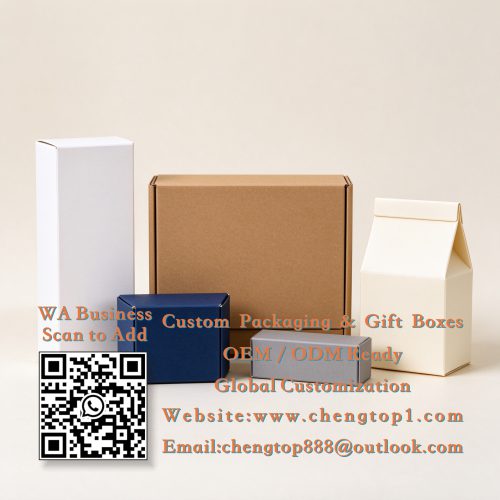
A launch needs five hundred boxes, the artwork is finished, and the quotations that come back look strange: the unit price is double the rate a friend pays for fifty thousand. Nothing is wrong with the quote. Short runs pay for set-up the way long runs amortise it, and the honest question is which production route loses the least money to that arithmetic.
Why does a small order cost so much per box? The set-up work is close to fixed. Plates or a cutting die, make-ready on the press, colour matching and cleaning all cost roughly the same whether the run is five hundred or fifty thousand. On a long run those costs spread thin; on a short one they sit on every box. The structure of that arithmetic is set out in the cost breakdown guide, and it explains the bulk of what surprises buyers about small quantities.
What does digital printing change? Digital presses print from a file without plates, so the plate cost vanishes and versioning becomes cheap: five hundred boxes can be fifty designs of ten, or five seasonal variants, at nearly the same price. Set-up time collapses, which also shortens the lead time. The trade-offs sit in substrates, format size and certain effects: metallics and heavy finishes that offset does in-line are workarounds in digital, and very large sheets are outside many digital formats. The comparison of digital and offset printing sets the two methods side by side, and the overview of printing methods adds the wider context.
Where is the crossover between routes? It moves with the job. A single design at a few thousand units often prices close enough on offset that the finish quality wins; a many-version job at a thousand units is digital’s home ground. The crossover also shifts with colour demands, because a brand colour that needs ink mixing behaves differently on each route. The practical approach is to quote the same job both ways at the real quantity and compare the total, not the unit rate, since a cheaper per-unit price on a larger run is only a saving if the boxes get used.
What are the hybrid escape routes? Three are common. Print a neutral standard structure in offset at a comfortable quantity and differentiate with applied labels, which suits test launches and private label work. Use a stock die with custom print, as described in the folding carton selection guide, which removes the die charge while keeping full print quality. And split the order: a digital batch for the launch, with the offset run sized to actual demand once the market has voted. The last route costs a little more in total and eliminates the risk of a warehouse of obsolete boxes.
What should a short-run buyer insist on? The same proofing discipline as a long run, because a mistake hurts more per box. Colour standard, dieline confirmation and a physical sample before the run matter at five hundred exactly as they do at fifty thousand, and the sampling process is the same one described in the full sampling guide. What a short run can skip is nothing; what it can relax is the volume, and only that.
Send the quantity, the design count and the finishing you want, and we will quote the digital and offset routes side by side. Start on the quote request page.
Chengtop prints caixas dobráveis, caixas de cartão ondulado and rigid boxes at our plant in Wuhan, and small first runs are a normal part of the order book here. Message us with the job and we will respond with both routes priced.