Custom Thank You Cards and Hang Tags: The Packaging Pair That Works as One Set
The card was reprinted twice and the hang tags arrived in a different cream — ordered months apart, they now sit in the same box looking like two brands made them. Cards and tags meet in every order you ship, so the colour, the stock and the string need one plan, not two purchase orders.
اطلب عرض أسعار
أدخل الكمية التي تحتاجها وأضفها إلى قائمة عروض الأسعار الخاصة بك للاستفسار عن الأسعار.
الوصف
Apparel and gift brands usually buy a custom thank you card at one point in the year and hang tags at another, from whichever supplier quotes lower that week. The customer never sees them separately: the tag rides on the product, the card lands on the tissue, and both appear in the same unboxing. When the pair mismatches — a warm cream tag against a cool white card, a matte card against a glossy tag — the customer reads it as carelessness even though they cannot name what is wrong. The fix is treating the two as one set from the first spec sheet, which is exactly how this guide is organised.
Give the Card and the Tag Separate Jobs

The tag is product infrastructure; the card is the relationship. Split the content accordingly and neither piece ends up crowded:
- Tag: size and fit data, material composition, care symbols, country of origin, and a barcode or QR if retail requires it. It is read once, at the point of decision.
- Card: the message, the discount code or review invitation, the brand story in two lines. It is read at home, after the purchase is already made.
When both carry the same promo code and the same logo at the same size, the customer gets one message twice and neither piece earns its place. A tag measuring roughly 40–50 mm by 80–100 mm holds the product data comfortably; the card keeps its standard A6 or square format for the message. Matching paper weight keeps the pair feeling like a family: 250–300 gsm on the tag, 300–350 gsm on the card is a pairing that photographs well together.
Match the Stock, the Colour and the String
Colour drift between the card and the tag is the most common failure, and it starts with the paper order. Cream and kraft both shift between mills and even between production batches, so ask for physical swatches of both stocks at the same time, held side by side under daylight. If the pair is printed in two passes, the same Pantone reference can still land differently on kraft than on coated card — kraft drinks ink, and the tag usually needs a slightly stronger ink density to match a card printed on white stock.
Three details decide whether the pair feels deliberate:
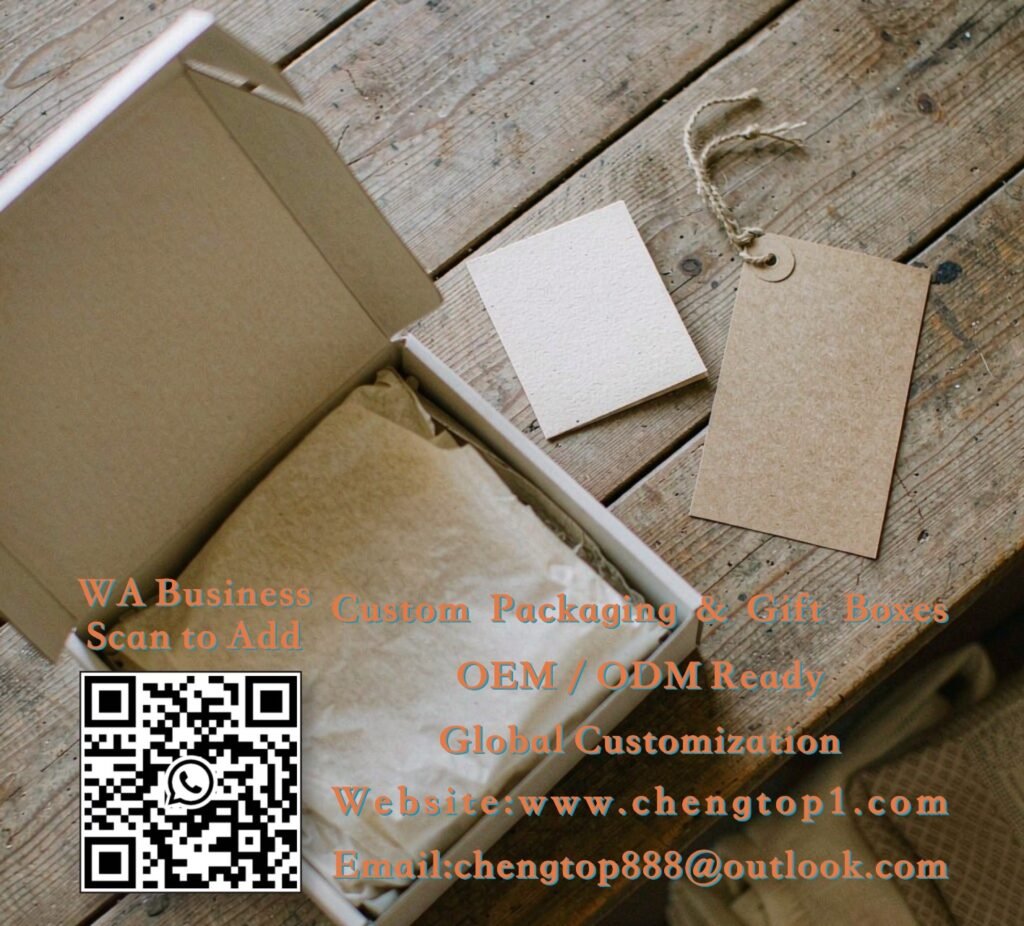
- Finish pairing: uncoated card with uncoated tag reads as one set; a glossy laminated tag against a matte card reads as leftovers from two projects.
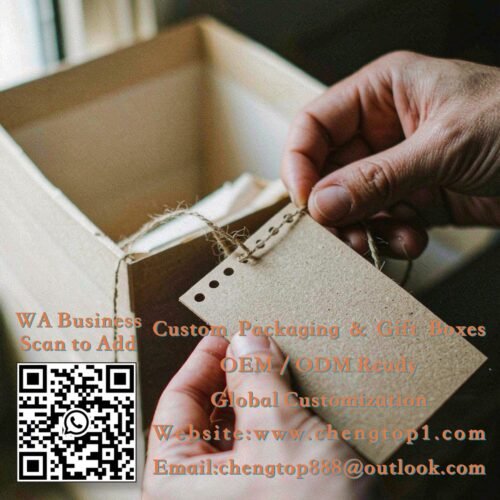
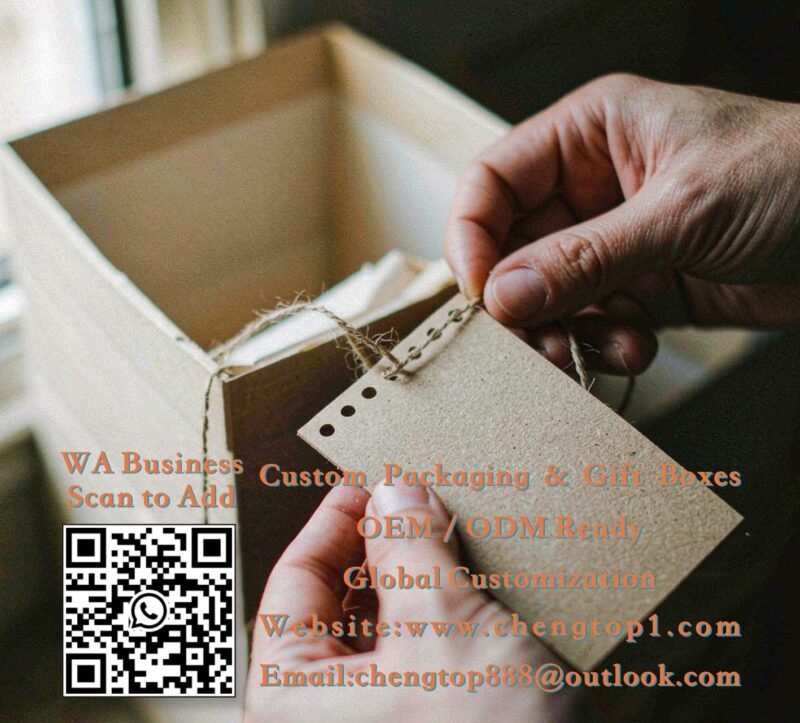
- Hole and string: a 3–4 mm punched hole with reinforced eyelet suits cotton or jute twine of 1–2 mm; a hole punched too close to the edge tears out on the shop floor.
- String length: 15–25 cm per tag is enough to loop through a garment sleeve or a bag handle without doubling back on itself.
Order the string with the tags rather than sourcing it separately — suppliers who make both can pre-cut and tie, which removes the most tedious step from your packing bench.
What Each Piece Costs, and Where Not to Save
A plain printed card and tag set is one of the cheaper line items in packaging — at typical volumes, the card and tag together often cost less than the tissue they sit on. That low unit price hides the two places where saving money shows up badly. Die-cut shaped tags (circles, custom silhouettes) carry tooling and slower run speeds; copying a competitor’s tag shape to avoid the die produces a tag that never sits flat on the product. And recycled kraft stock varies visibly between batches — worth it for the sustainability story, but only if the card uses a matching recycled stock too, so the variance moves as a pair.
Spend instead on the details the customer touches: a slightly heavier card (300–350 gsm rather than 250), a cleanly punched hole with no burrs, and consistent twine. These differences cost cents per set and are what separates packaging that gets photographed from packaging that gets recycled.
Order the Pair as One Set
Quantities should track the product, not the calendar. If the season plan is 10,000 units, that is 10,000 tags, 10,000 cards and roughly 10,000–10,300 strings — with the small buffer on the string, because ties get lost on the packing bench. Keep 3–5 percent spare on both printed pieces for re-packs, returns that ship back out, and photo shoots; a set missing its card waits exactly like a set missing its box.
Bundling pays beyond convenience: one supplier producing the card, the tag and the string shares a single colour reference, a single freight run and a single set of swatches to approve — and the same logic extends to the bag the set travels in. Our custom stickers and labels and paper bags can be specified in the same project so the tag, the card, the seal and the bag arrive matched and ready to pack.
FAQ: Thank-You Cards and Hang Tags as One Matching Set
What is the MOQ for cards and hang tags ordered together?
Most custom card orders start at 500 to 1,000 pieces for a first run, with a lower unit cost at larger quantities; the minimum shifts with card size, stock, finishing and any die-cut or perforation. custom thank you cards For a first launch we can quote a tiered MOQ that covers your opening run without leaving you with spare stock.
Why match cards and hang tags to the same design?
A digital or printed proof usually takes 3 to 5 working days after artwork confirmation, and bulk card production runs 7 to 12 working days once the sample is approved. Perforation, foil stamping or special stocks add a little time, so send both the card and any matching packaging target dates. custom thank you cards
Which stocks finish cleanly on both cards and tags?
For thank-you cards paired with hang tags, a 250–300 gsm uncoated or matte stock prints cleanly and survives folding and fulfilment handling; we match the weight and finish to how the card is handled and where it sits in the box. custom paper bags
Can the set match our boxes, bags and seal stickers?
Send your logo vector file, Pantone or CMYK references and the card dimensions. We check contrast, minimum text size and any QR or barcode legibility before press, and adjust the layout where one language or panel is too tight. علب هدايا صلبة and stickers and labels
How long does a combined card-and-tag order take?
The cards print to match your other packaging so the whole unboxing reads as one brand; ordering the set together keeps paper colour and finish consistent and usually improves the price per piece. custom thank you cards
Ready to Pair Them Up?
Send us your card size, tag artwork and product photos — we will spec the pair as one matched set with swatches, free artwork check and a quote within 24 hours.