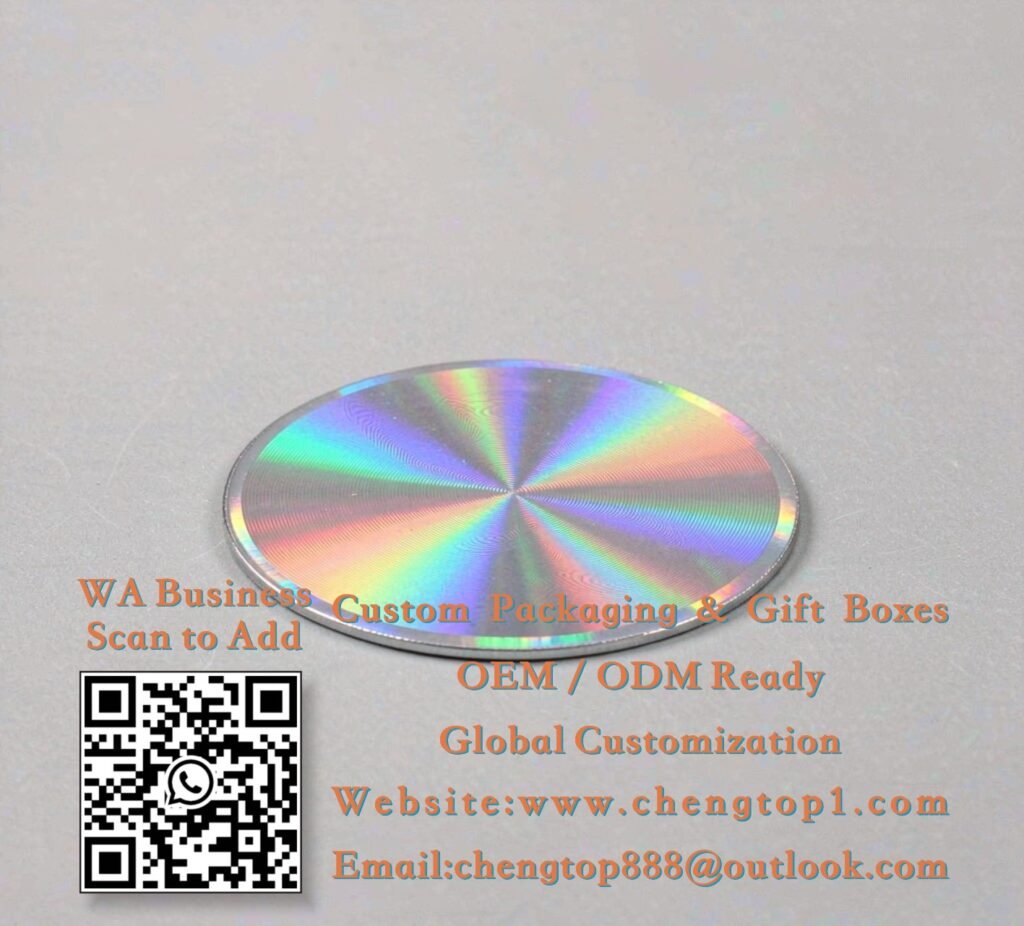


Holographic Security Stickers With Serial Numbers: Turning Every Scan Into Useful Data
A hologram answers whether a seal looks right. A serial number answers which unit this is, and where it has been. Brands often pay for unique codes and then use them as a yes-or-no checkbox, losing the batch, channel and repeat-scan records that actually catch problems. Here is what to settle before the master plate is cut.
Solicitar un presupuesto
Introduce la cantidad que necesitas y añádela a tu lista de presupuestos para solicitar precios.
Descripción
Most verification projects are decided too late. Artwork gets approved, the master plate gets made, and only then does someone ask how the codes will be generated, who hosts the lookup page, and what happens when a customer checks the same code twice. Those are not IT questions to sort out after the labels ship — they change what gets printed on the sticker and what the factory needs from you before the plate is cut. Agree the code format, the data handover and the response rules while the dieline is still open and the system stays cheap to run. This guide covers how to number a run, what the verification page should and should not reveal, and which reports are worth exporting. Our holographic security stickers sizes are a useful reference for planning the layout.
Numbering Rules That Do Not Hand Copyists a Pattern
Sequential codes are the common mistake. If a run is numbered from 000001 to 005000, anyone holding one unit can guess the rest, and a copyist can make a convincing set of them. Ask for a randomised list of 12–16 character codes with a check digit, generated once and supplied as a locked file before printing. That file is the master record: it maps each code to a batch, a production date and a destination market. A dedicated master-originated hologram starts at 5,000 pieces with us, while standard stock designs start at 1,000. Either way, the code list belongs in the 3–7 day sampling stage, not halfway through a 10–15 working day production run.
Decide who owns the file as well. If your supplier holds it, agree in writing how it is transferred, who can access it, and whether it is deleted after handover. Variable data also needs room: on a 15–30 mm sticker, a legible code and a scannable symbol compete for the same few millimetres, so keep the holographic pattern in one zone and the printed code in a quieter one. A pre-production sample lets you check that the code reads under shop lighting and that the foil does not reflect the scanner into failing. It adds a few days, and it is far cheaper than discovering the problem on 5,000 finished labels.
- Use randomised 12–16 character codes with a check digit, not a sequential block
- Lock the code list before the master plate is cut — changes afterwards mean reprinting
- Keep variable data in a clear zone; fine foil texture behind a QR symbol raises scan failures
What the Verification Page Should Show, and What It Should Keep Quiet
The lookup page has one job: give an honest answer without teaching a copyist how to imitate it. When a code is checked for the first time, show the product name, the batch and a plain confirmation, plus a way to report a problem. When the same code is checked again, say it was already checked and when — a neutral phrase, not an accusation, because legitimate buyers often look twice, and gifts get rescanned by a second owner. Leave the checksum rule, the full code list and a detailed description of your optical features off the public page. All three help a copyist and none of them help a shopper. Host the page on your own domain with a short URL; a verification link that looks unrelated to your brand gets treated as phishing.
Log more than a yes-or-no result. Timestamp, coarse location such as country or region, scan count and device type are usually enough. Three or more checks of one code, or the same code appearing in two distant regions within 24 hours, is a reasonable trigger for a manual review — not an automatic counterfeit label, because returns, gifts and resale outside authorised channels produce the same pattern. One caveat: a fake site can copy your page design, which is why the physical hologram still matters. Verification data and a master-originated diffraction pattern cover different attack paths; dropping either one leaves a gap.
- Opening check: product, batch, confirmation and a report channel
- Later checks: a neutral “already checked” message with the earlier date
- Flag unusual patterns for review, and keep the response rules off the public page
Reports Worth Exporting, and the Cost of Collecting Too Much
Two reports earn their keep. A batch map shows which codes went to which distributor and when, so a complaint in one region traces back to a shipment in minutes rather than days. A repeat-scan report shows where codes are being checked more often than sales volume explains — often the first sign of channel leakage or a copied code. Export both monthly as CSV, keep 12–24 months of history, and delete the rest. Holding precise location data longer than you need creates obligations in many markets without adding much insight. If a product is ever recalled, that same batch map tells you exactly which codes to flag on the lookup page.
Keep the physical side consistent with the data side. Print the variable code on a custom label that matches the seal, and if the hologram also closes a box, confirm the seal position with whoever supplies the custom paper bags or the carton, so a customer never has to break the seal to read the code. Agree all of this in one proofing round; splitting the hologram, the code label and the box across three approvals is how a clean system ends up with codes hidden under a flap.
None of this is worth building for a low-value giveaway item. A stock hologram and a batch code on the carton will do. The data layer pays for itself when units are expensive, regulated, or sold through distributors you do not fully control — that is when knowing which unit went where is worth more than the sticker itself.
Ready to Add Verification?
Send us your target quantity, sticker size and whether you need a dedicated master pattern — we will reply with a numbering and layout suggestion, a free artwork check and a quote within 24 hours. Samples take 3–7 days, production 10–15 working days after approval, express 5–7 days and sea freight 20–40 days.