Labels on Recycled Packaging: Adhesion, Removal and Keeping the Whole Box Recyclable
Brands switch to recycled gift boxes, then apply the same glossy plastic label they always used — and undo part of the environmental story while creating adhesion problems they did not have on coated board. Recycled surfaces behave differently under labels, and the label itself decides whether the box can actually be recycled. Here is how to spec the pair together.
Demander un devis
Indiquez la quantité souhaitée et ajoutez-la à votre liste de devis pour obtenir un devis.
Description
Recycled board is a different substrate, not just a browner version of the old one. Its surface is rougher, more absorbent and made of shorter fibres, which changes how adhesives grip and how cleanly labels come off later. At the same time, the label material you choose decides whether the finished box belongs in the paper recycling stream or has to be torn apart before it goes anywhere. Get both decisions right and a custom label on a recycled box is a genuinely sustainable package; get either one wrong and you pay in lifting labels, contaminated recycling or a sustainability claim that falls apart under a customer’s question. This article covers the adhesion side, the recyclability side, and the reuse case in between.
Adhesion on Recycled Board: What Changes and What to Specify
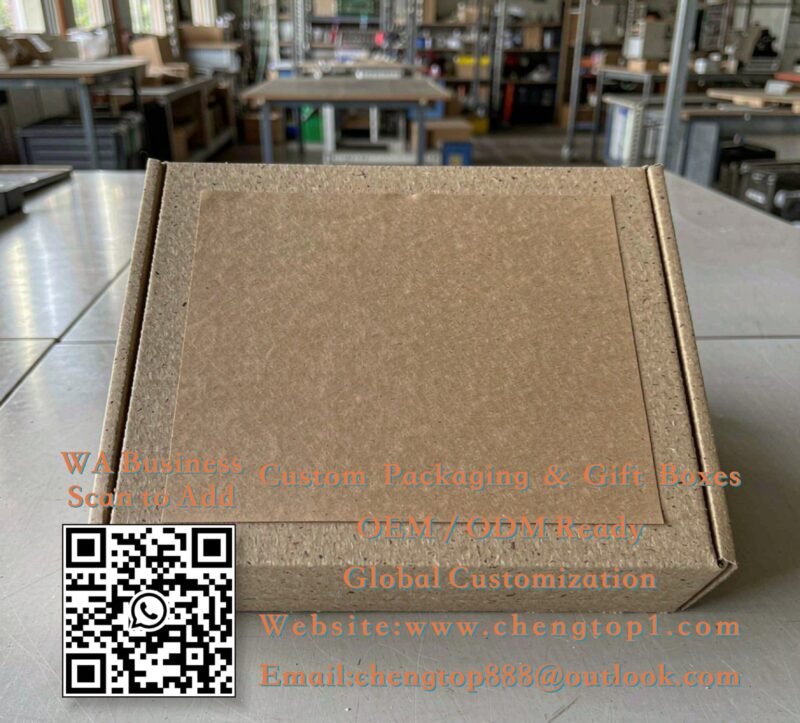
The rough, porous surface of recycled board actually takes adhesive well — the problem is not grip but consistency. Loose surface fibres and residual sizing make the same label adhere differently across a sheet, so edges that look bonded at packing can lift days later where the adhesive landed on a weak patch. Specify a higher-tack permanent adhesive for recycled substrates, and press labels with more force than on coated board, since the surface drinks adhesive into its fibres. Uncoated paper labels pair naturally here: kraft or cream stock on kraft board bonds fibre to fibre and looks deliberate rather than patched. One caution goes the other way — very rough boards with exposed fibres can shed under the label edge, so for the coarsest stocks ask the printer to test-adhere a proof sheet before committing the run; it is a five-minute check that prevents a full batch of lifting corners.
- Adhesive: high-tack permanent, specified for uncoated porous board
- Face stock: uncoated kraft or cream paper — matches the board and the recycling stream
- Application: firm, even pressure; test-adhere on the actual board before the full run
The Recyclability Question: The Label Decides Where the Box Ends Up

A recycled gift box is only recyclable if its label is compatible with paper recycling. Large plastic film labels and vinyl stickers are contaminants in the paper stream: mills screen them out, and a box visibly covered in plastic film can be rejected at sorting or degrade the recovered pulp. The working rule of thumb is paper face stock on paper board, with coverage kept reasonable — a small paper label is negligible, while a film label covering a third of the lid is a problem. Foil and metallic effects raise the same question in smaller type: a foil-stamped paper label is usually tolerated by mills at small sizes, but a full metallised film label behaves like plastic in the stream. Where plastic film is unavoidable, for moisture or durability reasons, either keep it small or design it for removal, and print a simple peel-off instruction on the reverse of an insert card. Wash-off adhesives — designed to release in the repulping process — are the upstream fix for brands that must use substantial labels; they cost slightly more per thousand but let the entire box enter the paper stream without any customer effort. Certification claims should stay modest: “recyclable packaging” is defensible when the whole construction qualifies, while label-specific claims need the label itself documented.
Removable Labels and the Reuse Cycle

There is a middle case worth designing for: packaging intended to be reused before it is recycled. Rigid gift boxes and drawer-style boxes often live several lives — storage, gifting, organisation — and a removable-adhesive label lets each life carry fresh information without scarring the board. Removable adhesive is specified by clean release after a stated dwell time, so test the combination you actually plan to ship: the same adhesive that peels cleanly after a week can leave residue after six months in a warm cupboard. For brands running recycled paper bags alongside the boxes, matching the label stock across both keeps the material story consistent — one uncoated paper label spec serving the whole set simplifies both the recycling claim and the reorder. The label becomes the component that carries the brand across every generation of the packaging’s life, which is a quieter environmental story than any printed badge.
Ready to Spec the Pair?
Send us your box board sample or a photo, the label size and where it will be applied — we will suggest a compatible face stock and adhesive, run a free artwork check and reply with a quote within 24 hours.