Covering Old Labels With New Ones: A Clean Relabeling Guide for Rebrands and Leftover Stock
A rebrand, a regulation change or a formula update can leave you sitting on thousands of boxes printed with information that is suddenly wrong. Reprinting boxes takes weeks and a fresh cash layout; covering the old label with a new one takes days and fixes the problem at a fraction of the cost — if you spec it correctly. This guide covers when overlaying works, how much overlap you need, and where relabeling stops being a good idea.
Request a Quote
Enter the quantity you need and add to your quote list for pricing inquiries.
Description
Every brand eventually inherits packaging it can no longer use as printed: a logo refresh, an ingredient list that changed, a barcode that moved, a market that now requires different wording. The instinctive reaction is to discount the stock or throw it away, but in most cases a well-spec’d custom sticker applied over the old label solves the problem in one production cycle. The catch is that overlaying is a different job from labeling a bare box — the adhesive, the size and the application method all change. Get one of them wrong and the new label peels, bubbles or telegraphs the old print underneath. Here is how the numbers work.
When Covering Beats Reprinting — and What Each Option Actually Costs You

Reprinting a box run means new plates or new digital setups, a 10–15 working day production window, and waiting for existing stock to sell down or be scrapped. A relabel run usually prints at the 1,000-unit minimum, proofs in 3–7 days, and can be applied to finished boxes as they ship — no retooling, no disposal. For a brand sitting on 4,000 boxes after a mid-cycle logo change, that difference often decides between selling the stock at full price and writing it off.
Overlaying earns its keep in a handful of recurring situations:
- Rebrands and logo updates on otherwise sound packaging
- Regulation or ingredient changes, where a revised label goes over the outdated one
- Barcode or price changes before a retail deadline
- Seasonal editions: a festive wrap label turns standard stock into a holiday SKU without a reprint
One warning before you plan around it: covered labels are a rescue tool, not a permanent architecture. A box designed from the start for a label will look cleaner than a box designed as a printed piece and then patched — so treat relabeling as the way to save this batch, not the way to spec the next one.
Getting the Geometry Right: Label Size, Opacity and Adhesive for Covering Old Print

Coverage fails at the edges more often than in the middle. The working rule is at least 3 mm of new label beyond the old label’s edge on every side, and 5 mm if the box surface is textured or the old label sits on a curved area. That margin does two jobs: it hides the old print completely, and it bonds to clean box surface instead of trying to stick to the old label’s own adhesive layer, which is the weakest possible footing. If the old label was cut at an angle or applied unevenly, measure the worst case and size the new label to that, not to the specification sheet.
Opacity matters just as much. Transparent film — great on bare surfaces — will ghost whatever sits underneath, so overlays should be opaque paper stock or a white-ink-layered film. Darker old labels may even need a second flood of white beneath the new design. On adhesive: specify a high-tack permanent glue. The box surface below has often been handled, dusted or lightly polished in storage, and a standard adhesive that grips fresh cartons well can creep on top of a label that has been sitting for months.
Application Details That Decide Whether the Fix Looks Intentional

Application is where covered labels differ most from first-time labeling. Wipe the old label with isopropyl alcohol and let it flash off, since surface dust is the usual cause of edge lift. Apply the new label from the centre and smooth outward to push air toward the edges — trapping a bubble over the old label leaves a visible dome that catches light. Run a fingernail or a felt-edged squeegee along the perimeter twice; the second pass catches the corners that lifted during the first. For runs over a few hundred boxes, roll labels on a manual applicator apply faster and far more consistently than hand-placed sheet labels, and the consistency shows on the shelf.
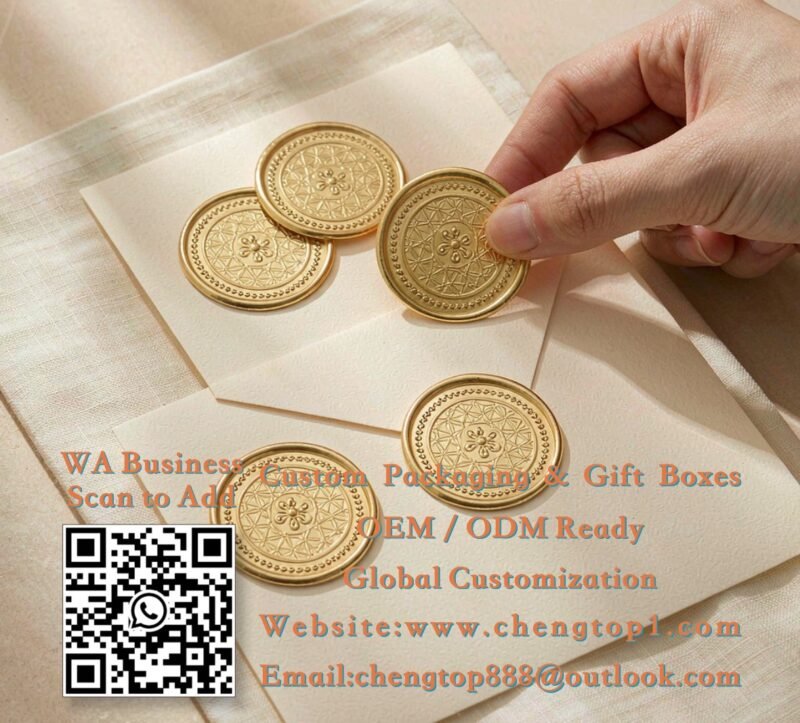
If the packaging in question seals shut — mailers, fold-lock boxes — a relabel run is also a natural moment to add a tamper seal across the closure. A small holographic security sticker over the flap both secures the repackaged unit and quietly tells customers the product is genuine, which matters when relabeling follows a formulation change.
Where Relabeling Stops Being the Right Answer
There are three situations where covering the old print costs more than it saves. First, heavily textured or fabric-wrapped surfaces: the old label’s edges show through an overlay as ridges no matter how thick the stock, and the result reads as a patch. Second, cases where the new information needs more space than the old label occupied — a revised ingredient list that runs longer than the original cannot be squeezed into a covering shape without violating legibility rules. Third, premium or gift packaging: an overlay on a rigid gift box is visible on close inspection, and for a gift purchase that inspection is exactly what happens. In those cases, run the boxes as clearance stock with honest marking and order the corrected packaging properly. And if your old stock is flat-blank rather than misprinted, a different fix applies — plain boxes can be dressed up with a fresh label design instead of covered, which is also worth planning when you order custom paper bags and want one design to serve multiple product lines.
FAQ: Relabeling Existing Stock After a Rebrand
Can old boxes or bags be relabeled instead of reprinted?
Most custom label and seal orders start at 500 to 1,000 pieces for short promotional runs, with a lower unit cost at larger quantities; the minimum depends on label size, face stock, adhesive, printing process and any die-cut or security feature. custom stickers and labels We can quote a tiered MOQ for your opening run.
What is the MOQ for relabel stickers over old packaging?
A proof usually takes 3 to 5 working days after artwork confirmation, and bulk production runs 7 to 12 working days once approved; foil, serial numbering or security features add time. Send your target delivery date so the run can be scheduled. custom stickers and labels
Will a cover-up sticker peel cleanly and hide the old print?
For relabeling old stock and rebranded packaging, the right face stock and adhesive depend on the surface, conditions and whether the label must stay on, peel cleanly or release in repulping; we test the pairing on your actual board before the full run. holographic security stickers
Should leftover packaging be reused, relabeled or replaced?
Send your logo vector, Pantone or CMYK references and the label dimensions. We match the brand colour on the chosen stock and check contrast, text size and scan legibility before press. custom paper bags and rigid gift boxes
How quickly can relabel stickers be produced?
Ordering the seals or labels together with the rest of the packaging keeps the material story and branding consistent across every item in the set. custom stickers and labels
Still Have a Question?
Send us a photo of the packaging and the old label’s dimensions — we will check the overlap margin, suggest the right stock and adhesive, and reply with a quote within 24 hours.