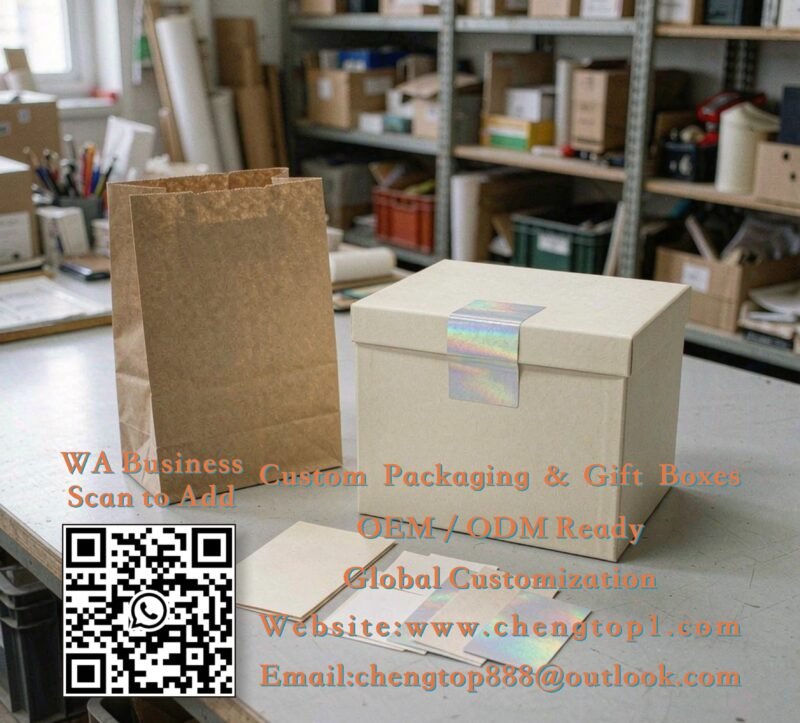
Holographic Security Stickers for Export: The Specs and Documents Overseas Buyers Should Request
A hologram that looks clean on the proof sheet can still fail an inbound inspection a month later — lifted edges, a yellowed foil, or a missing material declaration that leaves the carton sitting at the port. Export orders add a paperwork layer and a long, humid journey to a product many buyers specify as if it were staying local. Here is what belongs on the purchase order before the master plate is cut.
Demander un devis
Indiquez la quantité souhaitée et ajoutez-la à votre liste de devis pour obtenir un devis.
Description
Most of these problems are not printing problems. They come from reusing a domestic specification for a shipment that changes climate twice and crosses a border once. The foil, the adhesive and the release liner all behave differently after 20–40 days in a container, and the documents that clear customs have to be assembled while the run is still on the press, not after the invoice is raised. This guide covers the document pack, the temperature and humidity targets, the way rolls should be packed, and the ownership papers for a dedicated pattern. Our holographic security stickers sizes give you a starting point for the dieline, but the export spec is a separate conversation.
Documents Your Destination Market Will Ask For

Ask for the document pack alongside the pre-production sample, not with the final shipment. Buyers in the EU commonly request a REACH SVHC statement for the film and adhesive, a RoHS statement when the sticker goes onto electronics packaging, and a safety data sheet for the adhesive. Food and cosmetics brands usually want a short written note confirming the label sits on the outside of the pack and is not a direct food-contact surface. Some US buyers add a Proposition 65 question. None of these change the artwork, but collecting them late adds days to a lead time that is otherwise 10–15 working days.
Two further papers protect you commercially rather than technically. A certificate of origin and the correct HS classification go to your broker — self-adhesive printed labels are usually classified under 4821 or 3919 depending on whether paper or plastic film dominates, so let the broker confirm the code rather than guessing on the commercial invoice. And a master authorisation letter matters if you paid for a dedicated hologram: it states who owns the origination and prevents the same pattern being offered to another brand later. A dedicated master starts at 5,000 pieces with us, while stock patterns start at 1,000.
- Request REACH / RoHS statements, the adhesive SDS and a non-direct-food-contact note with the sample
- Have your broker confirm the HS code before the commercial invoice is issued
- Put master ownership, code file ownership and sample retention in writing on the order
Twenty to Forty Days at Sea Is a Spec, Not a Shipping Detail

Container interiors run far hotter than the outside air, and a hologram built on 25–50 µm PET with a 20–25 µm adhesive layer behaves differently from a paper-faced label under that load. Ask for a service temperature range in writing instead of the word waterproof. A workable acceptance test for most general cargo is no edge lift, no foil yellowing and no adhesive bleed after 72 hours at 40°C and 90% RH; it costs a day in the sampling stage and tells you more than a spec sheet does. If the seal will sit on a chilled or frozen product, say so at quotation, because a general-purpose hot-melt adhesive loses tack below roughly 5°C and a freezer-grade formulation is priced differently.
Application conditions at the receiving end matter just as much. Labels go on at 15–25°C onto a clean, dry surface, then need about 24 hours of adhesive cure before cartons are stacked or palletised. Most reports of a hologram falling off trace back to dusty corrugate, a cold packing room or immediate palletising, not to the foil. Agree an AQL 2.5 inspection covering appearance, adhesion and code readability, and keep a signed retention sample from each batch for 12–24 months.
- Specify service temperature and humidity targets in writing, not just waterproof
- State whether the label is applied to a chilled, frozen or ambient surface
- Allow 24 hours of adhesive cure before palletising, and keep one signed retention sample per batch
Packing a Roll So It Arrives Flat and Usable

Format has to be settled before the labels are wound. Rolls normally ship on a 76 mm (3 inch) core at 500 or 1,000 labels per roll, with the unwind direction stated on the order so the customer’s applicator feeds them correctly. Sheet labels travel flat, interleaved and corner-protected, never upright in a carton. Each roll is sealed in a foil moisture barrier pouch with a desiccant sachet, then packed into an outer carton with a five-layer stacking limit noted on the outside. Roll ends are the weak point: a 5 mm crush on an edge shows up as a tracking fault on an automatic applicator, and no amount of re-rolling fixes it.
Unopened pouches stored at 20–25°C are usually planned around a 12-month shelf life, less in a humid warehouse, and opened pouches should be resealed the same day. Make sure the same batch number appears on the pouch, the outer carton and the packing list — it turns an inbound query into a two-minute check. If the hologram also closes a retail pack, confirm the seal position against the custom paper bags or carton dieline and against any custom stickers and labels used elsewhere on the same pack, all in one approval round. None of this is worth the extra cost for a low-value giveaway item; a stock seal and a batch code on the carton will do. It pays off when the goods are regulated, high value, or sold through distributors you do not control.
- State core size, labels per roll and unwind direction on the purchase order
- Foil pouch plus desiccant per roll, outer cartons with a stated stacking limit
- Match pouch, carton and packing-list batch numbers so an inbound query resolves in minutes
Ready to Ship to a New Market?
Tell us the destination country, the surface the seal will be applied to, your target quantity and whether you need a dedicated master pattern — we will reply with the full document pack, a spec suggestion, a free artwork check and a quote within 24 hours. Samples take 3–7 days, production 10–15 working days after approval, express 5–7 days and sea freight 20–40 days.