Laser Hologram or Rainbow Foil? Telling Real Security Stickers From Decorative Film
You ordered “hologram security stickers” and received shiny rainbow labels that a counterfeiter can buy by the kilo from any packaging market. Both products shimmer under light — only one of them carries a structure that is expensive to copy. Knowing the difference before you pay saves an order that looks identical on the invoice and performs completely differently in the field.
Demander un devis
Indiquez la quantité souhaitée et ajoutez-la à votre liste de devis pour obtenir un devis.
Description
“Holographic” is doing a lot of quiet work in that phrase on your quote. Genuine laser holograms and metallized rainbow film — the material often sold as generic “laser film” or “hologram foil” — can end up on visually similar stickers, and plenty of buyers only discover which one they bought after copies appear on the market. The distinction sits in the surface structure, not the shine, and you can verify it yourself in under a minute with no equipment. This guide covers what each material actually is, three field checks anyone can run, and what to demand from a supplier so the certificate matches the sticker. Start with our holographic security sticker range in a second tab as you read.
What a True Laser Hologram Actually Contains

A true security hologram is an image, not a texture. The pattern is engraved into a master plate through laser interference or electron-beam recording, then embossed into a metalized layer at sub-micron depth. That structure lets the sticker hold real image behaviour: tilt it and a 2D/3D design shifts between layers, a hidden mark appears at a specific angle, or a laser pointer shone through the film projects a designed image onto a wall. Depth, motion and switching effects are all physically encoded — none of them exist in plain foil.
Three things only a real hologram gives you:
- Image behaviour: the pattern changes with viewing angle instead of simply sliding a uniform colour sheen across the surface.
- Micro-detail: genuine masters carry fine structures at 0.1–0.2 mm scale that survive magnifier inspection and degrade visibly when copied.
- Master control: the design lives on a registered plate, so the factory can prove who owns it and limit who re-orders it.
That structure is why copying one means re-engraving a master — days of specialised work and a cost barrier measured in tooling, not in film tonnage.
What Metallized Rainbow Film Is
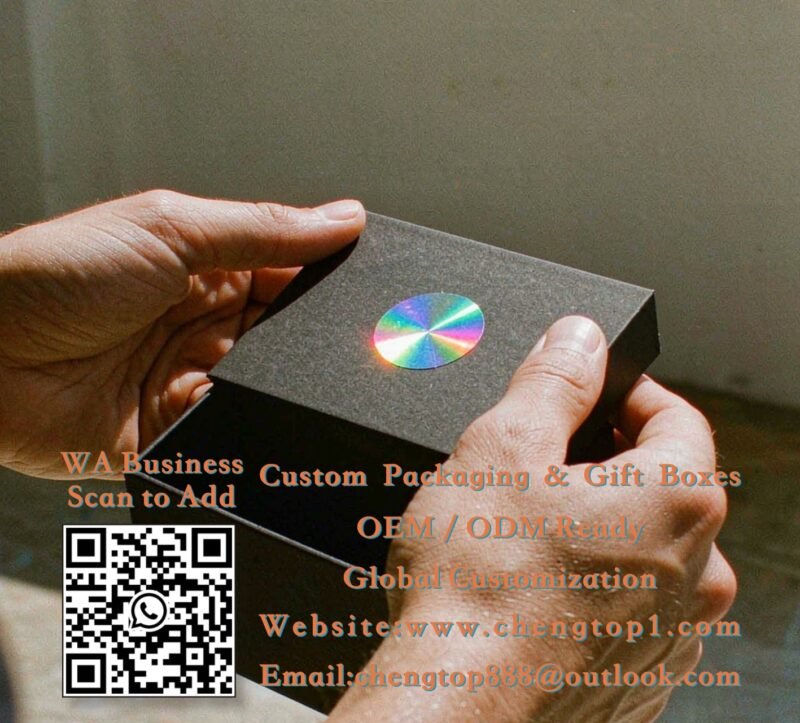
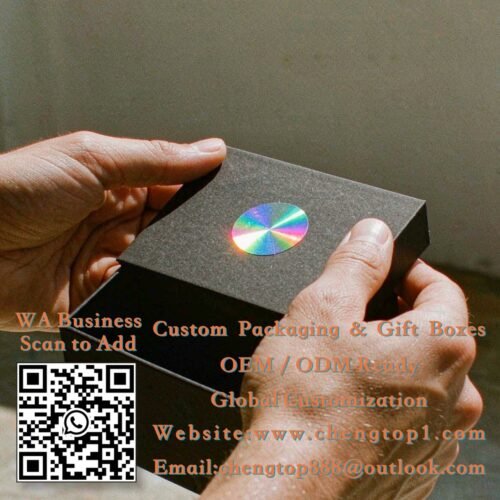
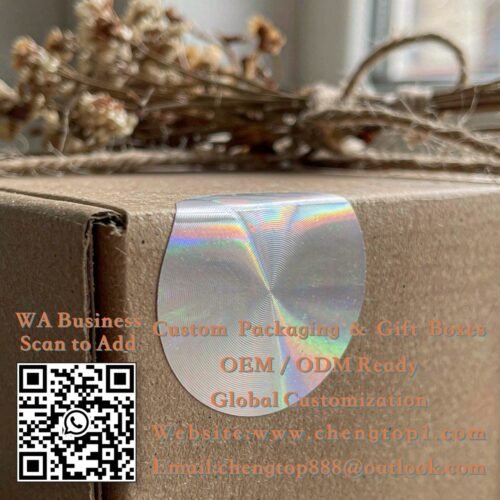
Rainbow film — usually metalized BOPP or PET with a generic diffractive pattern — is a commodity. It is produced in massive rolls, printed and die-cut like any other label stock, and it looks striking: a liquid rainbow that sweeps across the surface as it moves. As decoration on a gift box or a cosmetic carton it is excellent and cheap, and there is nothing wrong with ordering it knowingly. What it does not contain is a specific image. Tilt it and the colours shift; nothing appears, nothing switches layers, nothing projects. Because the base film is sold openly to anyone, a counterfeiter replicates a rainbow-film sticker by buying the same film and printing the same artwork — a copying cost close to zero.
The trap is naming. Suppliers who never mention a master plate, who quote suspiciously low minimums for a “custom hologram”, or whose samples show a uniform diffraction texture with no encoded design are almost always selling film, not holography. If the quote has no tooling line item, ask directly — a factory selling the real thing has a clear answer and a master to show.
Three Field Checks With No Equipment
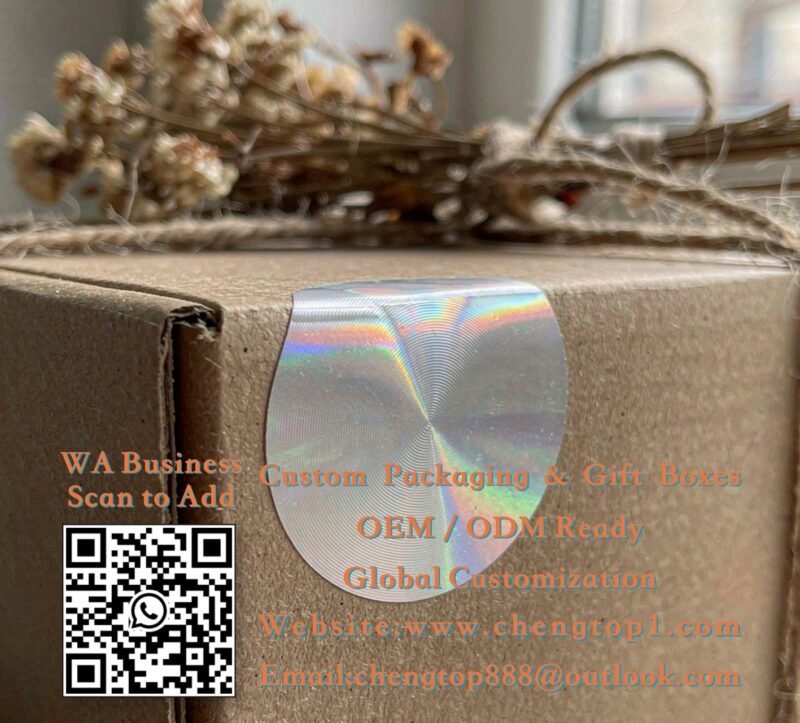
Before approving any sample, run the sticker through these checks — they separate the two materials more reliably than any certificate:
- Tilt test: rotate the sticker slowly under one light source. A colour sheen sliding across the surface is film; an image that switches, reveals or gains depth is a hologram.
- Torch projection: shine a small laser pointer or focused torch through the sticker in a dark room. A true diffraction structure scatters a designed pattern; generic film throws an unstructured glow.
- Magnifier inspection: examine the surface with a 10x loupe or a phone macro lens. Genuine masters show crisp, deliberate micro-geometry; commodity film shows repeating generic texture with no readable structure.
Film these checks on the physical sample, not on rendered images from a catalogue. A fifteen-second phone video of the tilt test is also the fastest way to settle a dispute later — it shows exactly what your approved batch does under light, and it becomes the acceptance reference for re-orders.
What to Put in the Order So You Get What You Paid For
Specification closes the gap that marketing language opens. When the goal is brand protection, write the order around the master: ask which effects are physically encoded (2D/3D switching, hidden image, micro-structure), request the tilt-test video of the actual production sample, and confirm ownership terms — who holds the master, who may re-order against it, and what happens if the plate is retired. Genuine hologram orders carry a tooling fee and usually a higher floor quantity, commonly 5,000+ pieces for a custom master; rainbow-film stickers can start near generic label minimums. That price gap is the honest signal of which product you are buying.
Pair the material with structure that film cannot fake: serial numbers, a scratch-off code, or a verification page make each sticker unique even before the hologram itself is examined. For sealing luxury or gift packaging, size the seal to the flap of the box it protects — our paper bags and custom stickers and labels can be specified together so the seal, the box and the bag arrive as one matched set.
FAQ: Real Holograms vs Decorative Rainbow Foil Stickers
What is the MOQ for genuine laser hologram stickers?
Most custom label and seal orders start at 500 to 1,000 pieces for short promotional runs, with a lower unit cost at larger quantities; the minimum depends on label size, face stock, adhesive, printing process and any die-cut or security feature. holographic security stickers We can quote a tiered MOQ for your opening run.
How do I tell a real hologram from a printed rainbow foil?
A proof usually takes 3 to 5 working days after artwork confirmation, and bulk production runs 7 to 12 working days once approved; foil, serial numbering or security features add time. Send your target delivery date so the run can be scheduled. holographic security stickers
What security level suits my product and risk?
For genuine laser hologram versus decorative rainbow foil, the right face stock and adhesive depend on the surface, conditions and whether the label must stay on, peel cleanly or release in repulping; we test the pairing on your actual board before the full run. custom stickers and labels
Can holograms be supplied with our other packaging?
Send your logo vector, Pantone or CMYK references and the label dimensions. We match the brand colour on the chosen stock and check contrast, text size and scan legibility before press. boîtes rigides sur mesure and custom paper bags
How long does hologram sampling and production take?
Ordering the seals or labels together with the rest of the packaging keeps the material story and branding consistent across every item in the set. holographic security stickers
Ready to Specify Real Security?
Send us your logo and where the seal will sit — we will propose the hologram structure, send a tilt-test video with your sample, and quote master, MOQ and unit price clearly separated.