Envelope, Wax Seal or Loose Card? How to Present Your Thank You Card Inside the Package
The same card can feel like junk mail or like a personal letter — the difference is presentation. Here are the four classic ways to put a thank you card into a package, what each one costs, and which suits your brand.
اطلب عرض أسعار
أدخل الكمية التي تحتاجها وأضفها إلى قائمة عروض الأسعار الخاصة بك للاستفسار عن الأسعار.
الوصف
Most brands order a beautiful card and then drop it loose into the box, face-down under the product. The card itself is fine — the presentation wastes it. How a thank you card arrives (face up or face down, sealed or open, on top or underneath) changes how it is read, kept, and photographed. Here are the four presentation styles we see working best, from simplest to most elaborate.
1. Loose on Top — Simple, Free, and Surprisingly Effective
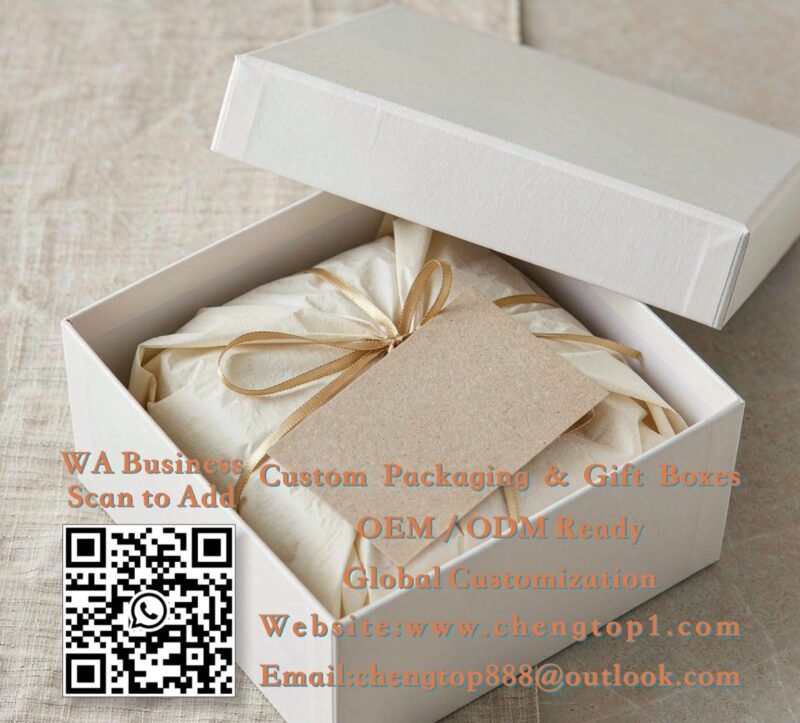
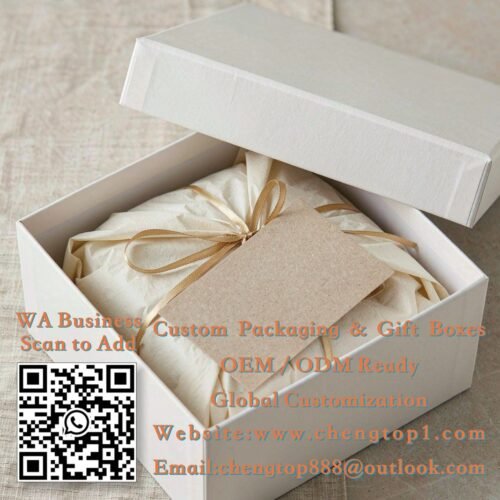
The simplest presentation is also the right one for many brands: card on top of the tissue or protective wrap, face up, angled slightly as if placed by hand. Two details do all the work here. First, the card must be the topmost item — customers should meet your words before your product. Second, a small physical anchor (the card tucked half under a ribbon, or resting on the tissue fold) makes it feel placed, not packed. Cost: zero. This is the style we recommend for high-volume shops where packing speed matters — it adds no seconds to fulfillment but instantly makes an ordinary box feel considered.
- Face up, on top, slightly angled — never underneath the product
- Tuck half under ribbon or tissue fold so it stays in place
- Best for: high order volume, lean packing teams
2. Tied to the Product — Ribbons, Twine and Wax Seals
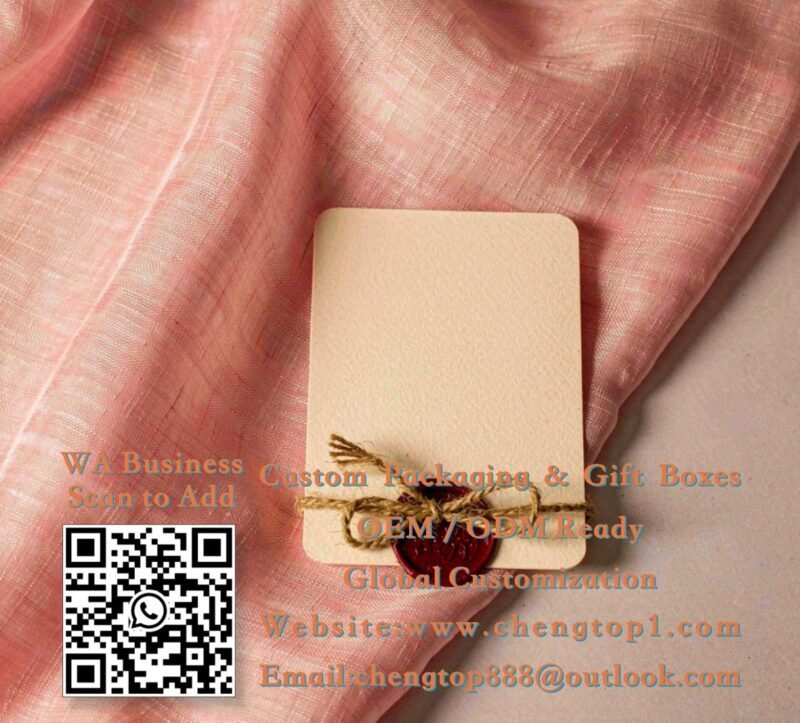
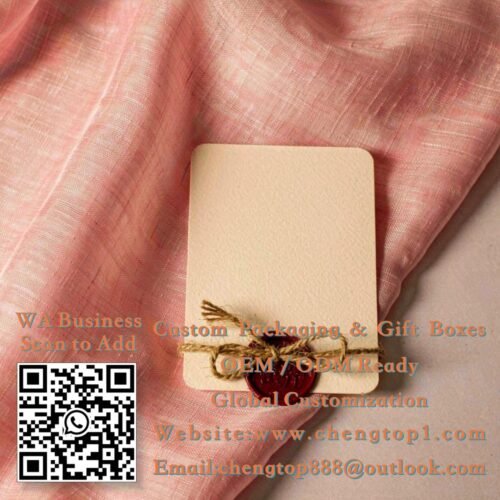
For apparel, scarves, candles and anything wrapped or boxed by hand, tying the card to the product itself transforms it from an insert into a gift tag. Natural twine with a wax seal at the knot is the artisan classic — the seal adds color, texture and the suggestion that someone touched this order personally. It takes seconds per unit and survives shipping well. The variant for rigid boxes: a ribbon around the product with the card slipped under the bow. This is the presentation customers photograph most, so if unboxing content on social media matters to your brand, this is the style to choose. It pairs naturally with a branded sticker on the outer box as the modern alternative to the wax seal.
- Twine + wax seal: artisan, handmade, memorable
- Ribbon + card under bow: gift-ready, photogenic
- Best for: apparel, candles, gifts, boutique brands
3. In an Envelope — the Formal Letter Effect

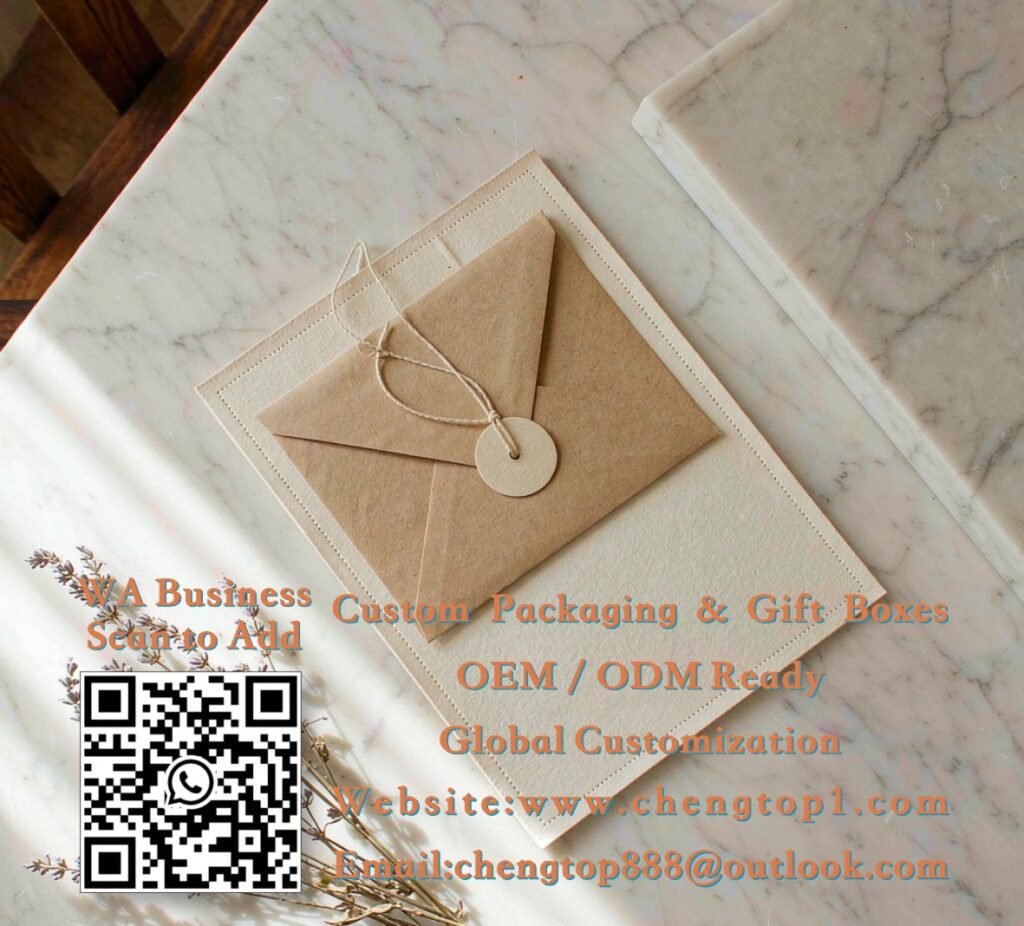
An envelope changes psychology: a loose card is packaging, but a sealed envelope is mail — something personal that demands to be opened. The kraft envelope with a matching card (as above) is the most popular combo, and the flap can be sealed three ways: self-adhesive (fastest), a round sticker (adds branding and makes the seal do double duty), or wax (ceremonial, for luxury goods). The trade-offs are real: envelopes add cost per order and one more packing step, so they suit lower-volume, higher-value orders — jewelry, personalized gifts, B2B samples. For those orders, the envelope effect is worth every cent.
- Sticker-sealed flap is the sweet spot: branded, secure, fast
- Adds roughly a few cents per order plus a packing step
- Best for: jewelry, luxury, personalized and B2B orders
Choosing Without Overthinking
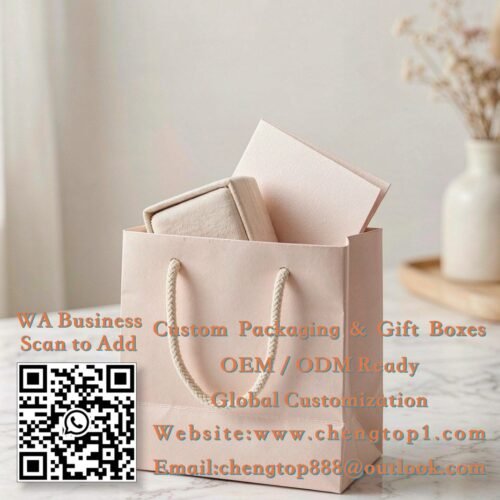
Match the presentation to the order economics: high volume and tight margins — loose card on top; mid-range boutique goods — tie or seal it to the product; low-volume, high-value — full envelope treatment. All three can share the same card design, so you can start with one and upgrade later without reprinting. Whichever you choose, order the cards together with your paper bags or boxes so colors match across the whole unboxing — one production run, one consistent brand. More on card sizes, papers and message writing is in our thank you cards collection.
Pick Your Presentation
Not sure which style fits your products? Send us what you sell and how you pack — we will suggest the presentation, sizes and quantities, free of charge.